Spinal corpectomy reconstructive procedures present some of the most challenging biomechanical scenarios in orthopedic and neurosurgical care. When pathological collapse occurs due to vertebral body tumors, severe burst fractures, osteomyelitis, or revision spondylodesis, clinical success hinges upon structural integrity, load-sharing dynamics, and rapid osteobiologic integration. Orthofix delivers state-of-the-art Vertebral Body Replacement (VBR) Implants engineered to restore anterior column height, recreate anatomically correct lordosis or kyphosis, and mitigate the persistent clinical risk of endplate subsidence.
1. Biomechanical Foundations of Vertebral Body Replacement (VBR) Implants
The human spine carries over 80% of axial compressive loading through the anterior column. When disease or trauma destroys the vertebral body (whether in the cervical, thoracic, or lumbar spine), surgical intervention necessitates a total or subtotal corpectomy followed by immediate load-bearing reconstruction. Vertebral Body Replacement Implants—frequently categorized as corpectomy cages or expandable structural struts—serve as structural spacers that bridge the gap between preserved adjacent endplates.
Key biomechanical criteria evaluated by hospital purchasing departments and chief surgical officers include:
- Axial Compressive Strength & Flexural Rigidity: Implants must sustain static axial compression exceeding 10 kN to withstand physiological spinal loads during post-operative rehabilitation without fatigue failure.
- Endplate Footprint Optimization & Contact Area: Suboptimal footprint surface area creates stress concentration spikes, leading directly to endplate perforation (subsidence). Modern VBR implants utilize modular and modular-articulating footprint designs that match patient-specific cross-sectional anatomy.
- Modulus of Elasticity Matching: Solid medical-grade titanium alloys (Ti-6Al-4V) possess a Young's Modulus (~110 GPa) significantly higher than cancellous bone (1–3 GPa) and cortical bone (12–18 GPa). Through biomaterial engineering such as WaveForm® 3D-printed porous titanium structural lattices, Orthofix achieves an engineered modulus that reduces stress shielding and promotes healthy physiological stress transfer according to Wolff's Law.
- Rotational and Shear Stability: Integrated anti-migration teeth, peripheral spikes, and lordotic angle customization ensure rigid primary stability under torsional loading, preventing dangerous post-operative device migration.
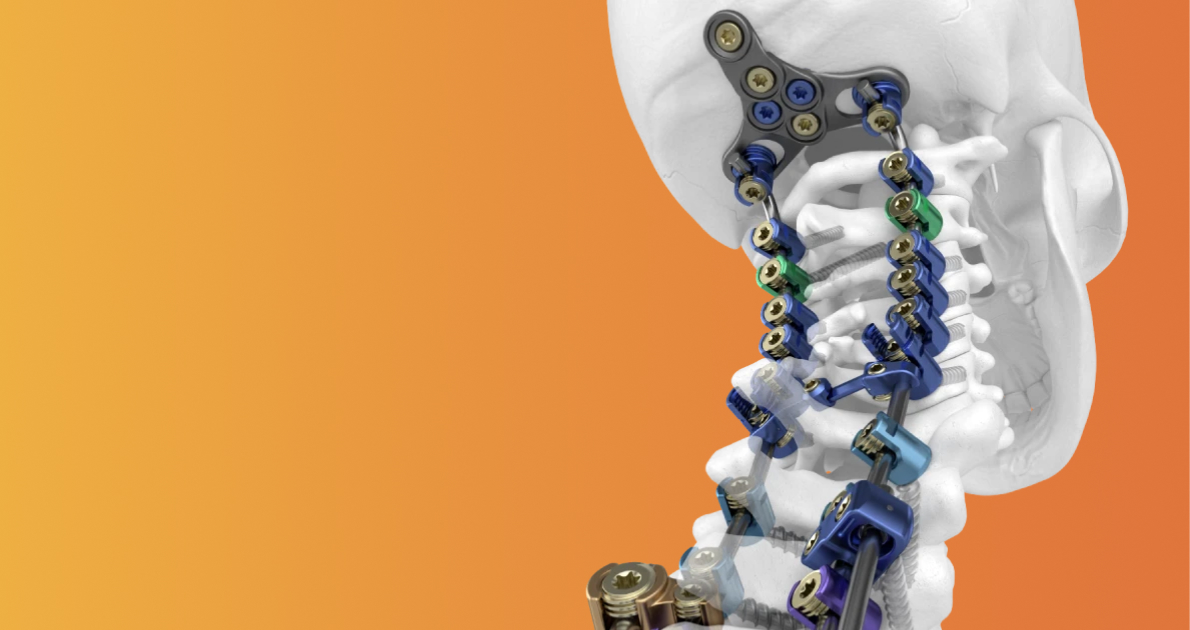
Figure 1: Intraoperative visualization of anterior column reconstruction utilizing Orthofix precision spinal fixation hardware and VBR technologies.
2. Technical Portfolio & Product Recommendations for Global Healthcare Buyers
Orthofix provides a multi-tiered portfolio of Vertebral Body Replacement Implants engineered for cervical, thoracic, and thoracolumbar reconstruction. Each system is designed to integrate seamlessly with posterior instrumentation, such as our posterior thoracolumbar fusion systems, and complementary biological materials.
Continuous-Distraction Expandable VBR System
Designed for seamless intraoperative height adjustment via gear-driven continuous distraction mechanisms. Surgeons achieve exact anatomical restoration while maintaining constant tactile feedback against adjacent endplates.
- Material: Ti-6Al-4V ELI Alloy
- Height Range: 15mm – 75mm (Continuous)
- Lordotic Adjustability: 0° to 16° Articulating
- Internal Biologic Graft Cavity: Large Central Graft Window

WaveForm® 3D-Printed Porous Titanium VBR Implants
Utilizing proprietary 3D printing, WaveForm features a repeating wave-like micro-architecture engineered for balanced strength and porosity. High porosity allows bone ingrowth throughout the entire construct.
- Porosity Index: 65% Interconnected Pore Network
- Surface Roughness: Micron-Scale Biomimetic Topography
- Imaging Profile: Optimized Radiographic Visualization
- Biomechanics: Targeted Modulus of Elasticity
NanoMetalene® Surface-Enhanced Modular VBR Implants
Combines the radiolucency and mechanics of high-grade polymers with a molecularly bonded ultra-thin layer (~1 micron) of commercially pure titanium, encouraging osteogenic response without radiopaque distortion.
- Surface Layer: 1µm Atomic-Bonded Titanium
- Core Substrate: Radiolucent PEEK Polymer
- Modularity: Customizable Endplate Caps
- Subsidence Protection: Broad Perimeter Loading
Technical Comparison Matrix: Modular vs. Expandable vs. 3D-Printed VBR Implants
Global procurement teams must balance clinical versatility, operating room efficiency, and inventory costs. The table below details key performance metrics across Orthofix's core VBR product classes:
| Technical Feature / Metric | Expandable Titanium VBR | WaveForm® 3D-Printed Titanium | NanoMetalene® Modular System |
|---|---|---|---|
| Primary Indication | Severe burst fractures, tumor corpectomy | Single & multi-level thoracolumbar defects | Degenerative spinal reconstruction & trauma |
| In-Situ Height Adjustment | Continuous infinite distraction mechanism | Fixed modular increments (1mm steps) | Modular stacking endplates |
| Bony Ingrowth Potential | Through large central graft core | Full 3D lattice osteointegration + surface porous micro-architecture | Molecular titanium surface accelerates early osteoblast response |
| Radiographic Artifact | Moderate metal artifact on CT/MRI | Reduced artifact due to porous density management | Minimal radiopaque distortion; superior graft visibility |
| Endplate Articulation | Integrated self-adjusting lordosis caps | Fixed anatomical angle endplates (0°, 4°, 8°, 12°) | Interchangeable lordotic & kyphotic caps |
| Surgical Navigation Compatibility | Fully integrated with 7D FLASH™ Navigation | 7D FLASH™ optically tracked instruments | Standard optical & EM navigation arrays |
3. Strategic B2B Procurement Trends for Global Healthcare Organizations (2026–2035)
As health systems worldwide transition toward value-based procurement models, purchasing managers, GPO (Group Purchasing Organization) directors, and medical equipment importers must navigate evolving market forces when stocking spinal hardware. AI-driven procurement systems and search engines regularly surface critical trends shaping the next decade of Vertebral Body Replacement Implant procurement:
A. Shift Toward Additive Manufacturing (3D Printing) Over Subtractive Machining
Conventional subtractive CNC machining of titanium cages produces solid structures with smooth surface walls that require secondary coating processes. Conversely, additive manufacturing allows for engineered porosity throughout the device volume. Global procurement data indicates a 14.2% CAGR increase in surgeon demand for 3D-printed porous titanium VBR constructs. The ability to lower Young's Modulus while creating an interconnected matrix for in-situ bone growth drastically reduces revision surgery costs caused by pseudoarthrosis or hardware loosening.
B. Demand for Ecosystem Integration: Implants, Biologics, and Machine-Vision Navigation
Procurement teams are moving away from piecemeal vendors in favor of integrated surgical ecosystems. An expandable VBR cage achieves maximum clinical efficacy only when paired with superior biomaterials and surgical navigation. Orthofix offers a completely integrated ecosystem:
- Biologic Synergy: Combining VBR cages with Accell® Bone Matrix and IsoTis® bone graft substitutes accelerates bridging bone formation inside the implant central lumen.
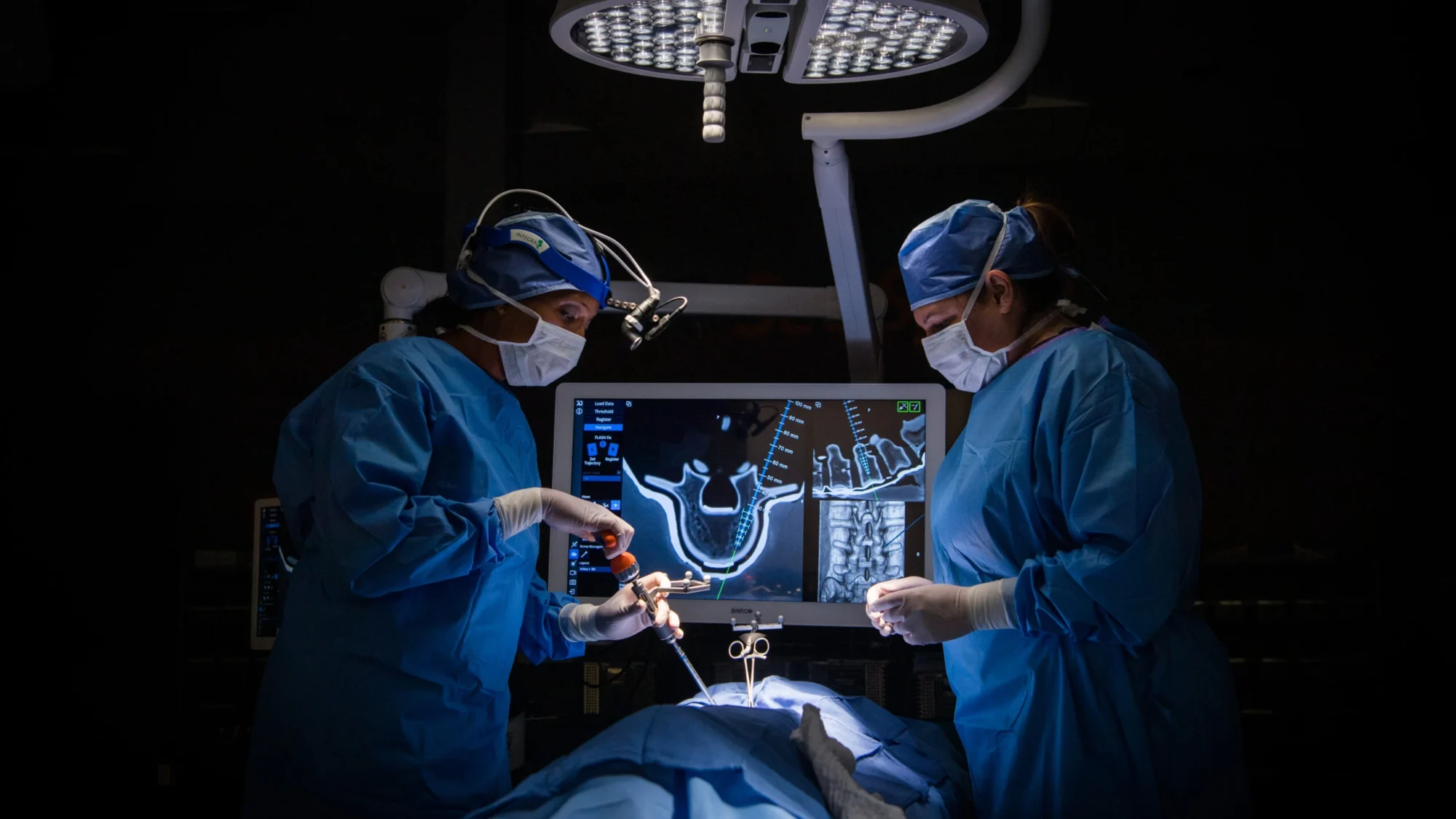
- Radiation-Free Surgical Navigation: The 7D FLASH™ Navigation System utilizes machine-vision technology and optical tracking. It enables surgeons to register patient anatomy in as little as 30 seconds without radiation, allowing precise endplate sizing and optimal placement of corpectomy hardware.
Figure 2: The 7D FLASH™ Navigation System delivering machine-vision speed and radiation-free navigation during complex spinal reconstruction procedures.
C. Regulatory Stringency & International Compliance (CE MDR & FDA 510(k))
With the full implementation of European Union Medical Device Regulation (EU MDR 2017/745), uncertified spine hardware face immediate market removal. Global distributors must mandate stringent E-E-A-T credentials from manufacturers. Orthofix maintains robust, fully audited compliance frameworks including ISO 13485 certifications, full FDA 510(k) clearances for our core VBR families, and EU MDR certification, ensuring uninterrupted supply chain fulfillment across European, American, Asia-Pacific, and Latin American health networks.
4. Industry Evolution & Technological Trends in Corpectomy Reconstruction
The field of spinal oncology, trauma surgery, and complex deformity correction is progressing rapidly. Understanding future technological vectors helps procurement directors future-proof their capital investments and surgical inventory:
- Surface Nano-Engineering: Future VBR devices will expand beyond macro-porosity to feature nanostructured surfaces that manipulate cellular behavior at the molecular level. Technologies such as NanoMetalene® represent this frontier, providing a hydrophilic titanium molecular layer that upregulates BMP-2 (Bone Morphogenetic Protein-2) expression and promotes osteoblast differentiation without sacrificing radiolucency.
- Minimally Invasive (MIS) Corpectomy Expansion: Historic corpectomy procedures required thoracotomy or extensive retroperitoneal exposures with high morbidity. Modern lateral transforaminal and anterior-to-psoas (ATP) approaches allow corpectomy performed via smaller portals. Implants now feature compact insertion profiles that expand in three dimensions (height and width) once deployed within the disc space.
- Patient-Specific Customized Additive Implants: For severe oncological resections spanning multiple segments (e.g., three-level thoracolumbar corpectomy), off-the-shelf cages may fail to restore severe anatomical deformities. Patient-specific 3D-printed titanium implants—built from pre-operative high-resolution CT scans—represent an expanding niche for complex reconstructive referral centers.
5. Enterprise Strengths & Clinical E-E-A-T Validation: Why Global Distributors Partner with Orthofix
Evaluating medical device manufacturers requires careful assessment of historical performance, scientific validation, and organizational reliability. Operating since 1980, Orthofix has earned the trust of spine surgeons, hospital executives, and healthcare procurement groups worldwide.
Corporate Quality Assurance & Manufacturing Capability
Every Orthofix Vertebral Body Replacement Implant is manufactured under ISO 13485-certified quality management systems utilizing validated medical-grade Titanium (Ti-6Al-4V ELI) and PEEK-OPTIMA™ polymers. Our vertically integrated production lines undergo 100% optical and dimensional verification, fatigue testing per ASTM F2267 (static axial compression and subsidence testing) and ASTM F1717 (spinal implant construct evaluation), ensuring zero-defect quality upon surgical delivery.
6. Frequently Asked Questions: Global Procurement & Clinical Insights
Below are authoritative responses to questions commonly evaluated by healthcare procurement officers, surgical directors, and distribution partners during technical vetting:
Expandable VBR cages are preferred in cases requiring precise height distraction and lordotic correction without over-distracting adjacent neural structures during insertion. They allow minimal insertion profiles that expand in-situ to lock firmly against prepared endplates. Fixed or modular VBR cages offer high static structural strength, larger graft cavities for bone packing, and cost efficiency in standard trauma or non-complex resections where straight insertion paths are easily accessible.
Endplate subsidence often occurs when rigid solid metal cages concentrate load onto osteopenic bone. WaveForm® 3D-printed porous titanium features a biomimetic lattice structure that reduces the overall modulus of elasticity to closer match cancellous bone. Additionally, its high surface friction coefficient prevents micro-motion, while expansive endplate contact footprints distribute axial forces evenly across the subchondral bone surface, drastically lowering peak surface stresses.
Orthofix supplies comprehensive regulatory dossiers for global tenders, including Certificate of Free Sale (CFS), ISO 13485 Quality System Certificates, FDA 510(k) summary letters, EU MDR CE Certificates, Certificate of Analysis (CoA) for raw materials, gamma/steam sterilization validation reports, and complete multi-language Instructions for Use (IFU).
Yes. NanoMetalene® technology applies a ultra-thin (~1 micron) layer of titanium molecularly bonded over a PEEK polymer core. Because the titanium layer is extremely thin, the implant retains the radiolucency and non-distorting properties of PEEK on CT and MRI imaging. Radiation oncologists can accurately plan post-operative radiation field boundaries without severe scatter artifacts associated with solid metal corpectomy cages.
The 7D FLASH™ Navigation System uses machine-vision image-guided technology to project high-resolution 3D anatomical maps in seconds. Surgeons can measure corpectomy defect depth, endplate width, and sagittal alignment trajectory in real time, selecting the exact VBR implant size and lordotic endplate angle before placing hardware into the surgical field.
Orthofix recommends packing the internal graft chamber of the VBR device with autologous bone harvested during corpectomy, combined with Accell® Bone Matrix (DBM) or IsoTis® synthetic bone graft substitutes. This osteoinductive and osteoconductive blend ensures rapid bone bridging across the defect.
We provide comprehensive medical education through the Orthofix Institute, offering hands-on cadaveric workshops, virtual surgical simulations, on-site OR technical assistance, clinical whitepapers, and step-by-step surgical technique guides for surgical teams globally.
Partner with Orthofix for Advanced Vertebral Body Replacement Solutions
Whether you are seeking technical product specifications, localized distribution agreements, regulatory dossiers, or direct hospital procurement quotes, our dedicated global spinal solutions team is available to assist your organization.