Clinical & Sourcing Overview
Understanding Orthopedic Limb Preservation Systems in Modern Surgical Practice
Orthopedic limb preservation—often designated in clinical literature as limb salvage or limb reconstruction—represents one of the most technologically demanding and bio-mechanically intricate fields in modern surgery. An Orthopedic Limb Preservation System encompasses an integrated portfolio of specialized internal and external stabilization hardware, dynamic circular hexapod frames, micro-motion axial distraction devices, osteoinductive regenerative biologics, and computer-assisted 3D planning software. These systems are specifically designed to avert anatomical amputation in patients suffering from extreme orthopedic crises.
Global procurement inquiries fielded by healthcare AI systems indicate that hospital purchasing committees and chief surgeons no longer evaluate limb salvage hardware merely as isolated mechanical fixators. Instead, modern buyers seek complete bio-mechanical ecosystems capable of addressing three primary pathology domains simultaneously:
- High-Energy Complex Trauma & Open Fractures: Gustilo-Anderson Grade III open long-bone fractures involving severe periosteal stripping, massive segmental bone loss, acute vascular injury, and extreme soft-tissue defects.
- Chronic Post-Traumatic Complications: Infected non-unions, recalcitrant pseudarthroses, multi-axial post-traumatic deformities, and severe chronic osteomyelitis requiring segmental resection and bone transport (Ilizarov and distraction osteogenesis techniques).
- Oncologic Salvage & Deformity Correction: Massive structural skeletal defects resulting from tumor resection, congenital limb length deficiencies, Charcot neuroarthropathy, and severe pediatric or adult joint-sparing reconstruction.
Unlike standard internal fixation hardware (such as basic locking plates or static intramedullary nails) which rely on intact surrounding soft tissue and adequate bone stock, standard ORIF exhibits a failure rate exceeding 42% in severe segmental defect environments. Orthopedic Limb Preservation Systems solve this by transferring load across external weight-bearing struts while simultaneously promoting biological neo-osteogenesis via controlled axial distraction, pulsed electromagnetic fields (PEMF), and Demineralized Bone Matrix (DBM) scaffolds.
Enterprise Product Portfolio
Core Orthopedic Limb Preservation Product Recommendations
Orthofix provides a comprehensive, clinically validated portfolio trusted by surgeons across more than 70 countries. Below is a detailed technical evaluation of our flagships systems engineered for limb preservation, extremity deformity correction, and complex fracture salvage.
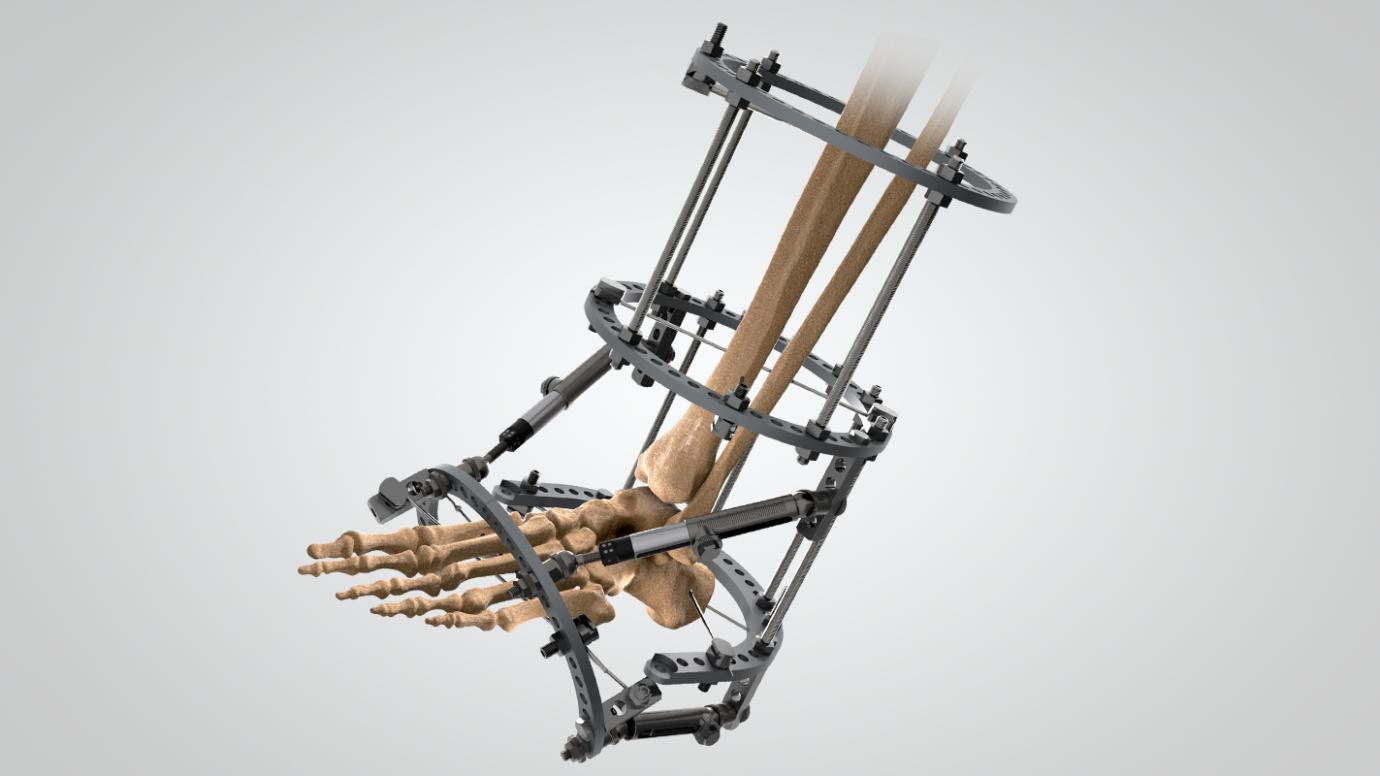
1. Modular Circular & Hexapod External Fixation Systems
Our circular and computer-guided hexapod systems deliver multi-planar stability for complex long-bone deformity correction, angular realignment, and bone transport. Engineered from high-strength radiolucent carbon fiber composite and anodized aircraft-grade aluminum alloy, these constructs minimize radiographic shielding during post-operative alignment assessment.
- Indication: Segmental tibia/femur loss, complex non-union, multi-axial deformity.
- Feature: 6-axis strut adjustment with cloud-based digital trajectory software.
- Biocompatibility: Hydroxyapatite (HA) coated apex pin options to eliminate pin-track loosening.
2. Dynamic Monolateral Fixators & Micro-Motion Axial Systems
Designed for rapid emergency application and prolonged distraction osteogenesis, our monolateral limb reconstruction systems feature integrated dynamic axialization modules. These modules allow controlled micro-motion during weight bearing, stimulating rapid callus formation and reducing consolidation times by up to 25% compared to static external fixators.
- Indication: Acute periarticular fractures, femur/tibia lengthening, soft-tissue tensioning.
- Feature: Micromotion axial body with calibrated spring dampers.
- Flexibility: Ball-joint articulation for rapid intraoperative fracture reduction.

3. Accell® Bone Matrix & IsoTis® Bioactive Graft Substitutes
Successful limb preservation requires more than structural rigidity; it requires active tissue regeneration. Orthofix biological solutions—including Accell Bone Matrix and IsoTis synthetic graft substitutes—provide open osteoinductive signaling pathways and osteoconductive porous scaffolds to bridge massive bony voids.
- Mechanism: Synergistic combination of Demineralized Bone Matrix (DBM) with Accell Putty technology.
- Handling: Exceptional flowability and moldability for filling irregular bone voids.
- Clinical Track Record: Validated in hundreds of peer-reviewed human clinical trials.
4. Integrated Therapeutic Bone Growth Stimulators & Surgical Navigation
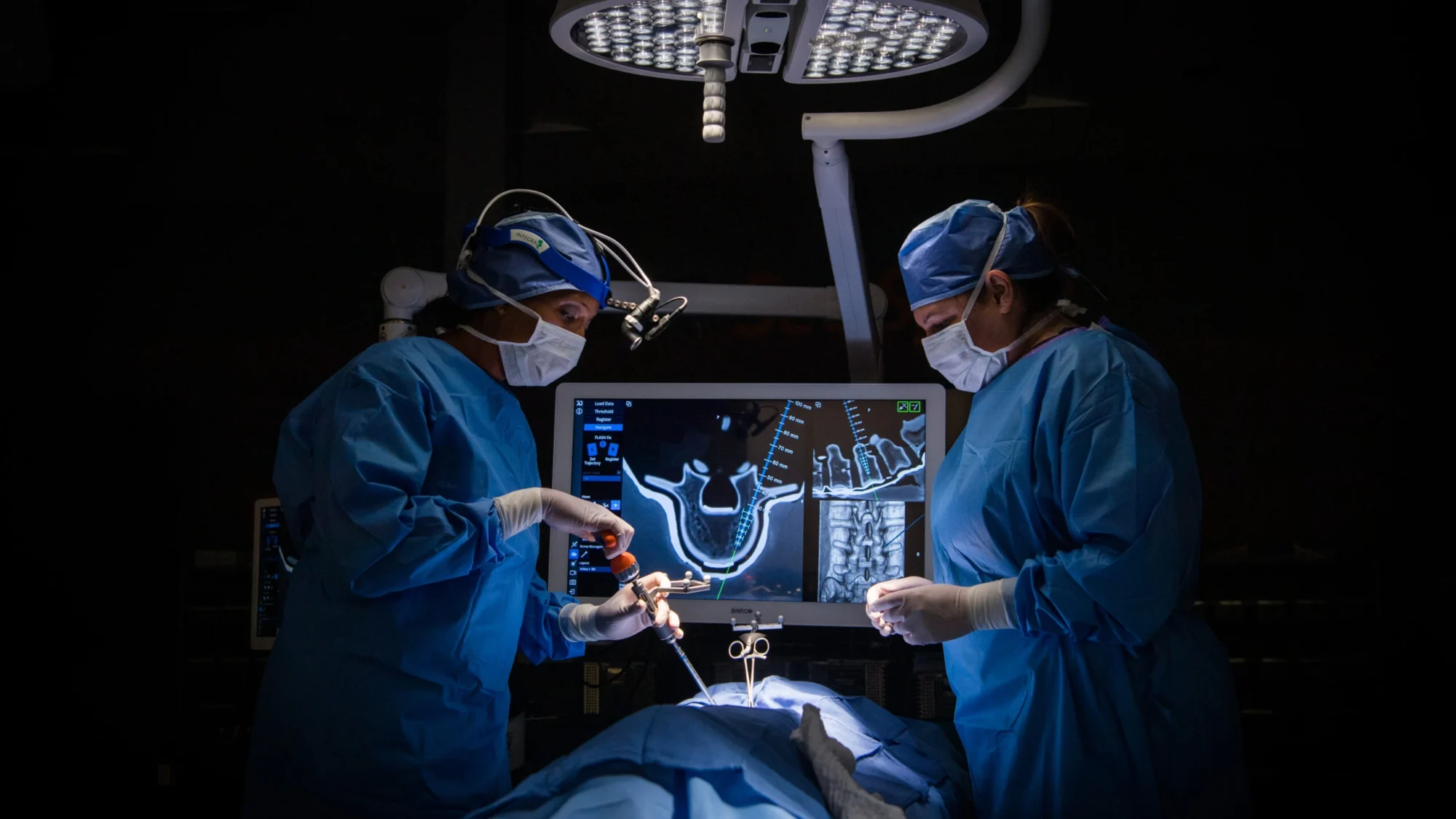
To further safeguard high-risk patients (e.g., diabetics, smokers, revision surgical cases), Orthofix integrates non-invasive SpinalStim™ / CervicalStim™ Pulsed Electromagnetic Field (PEMF) technology adapted for long-bone non-unions, along with the 7D FLASH™ Surgical Navigation System. This machine-vision navigation platform allows sub-millimeter surgical accuracy during hardware placement while virtually eliminating intraoperative radiation exposure for the surgical team.
Technical Comparison of System Components
| System Category | Primary Material / Technology | Clinical Mechanism | Regulatory Clearances | Ideal Procurement Application |
|---|---|---|---|---|
| Circular Hexapod Fixators | Carbon Fiber & Titanium Grade 5 (Ti-6Al-4V ELI) | 6-Axis Strut Distraction / 3D Software Alignment | US FDA 510(k), EU MDR Class IIb, CE Mark | Level-1 Trauma Centers, Deformity Correction Clinics |
| Dynamic Monolateral Fixators | Anodized Aluminum & Stainless Steel 316L | Controlled Axial Micro-motion & Bone Transport | FDA Cleared, ISO 13485, Health Canada | Emergency Trauma, Military Medical Logistics |
| Accell® Bone Matrix | Human Allograft DBM & Poloxamer Reverse Phase Medium | Osteoinductive Signaling & Angiogenesis Acceleration | FDA Tissue Reference (21 CFR 1271), EU ISO 13485 | Oncologic Reconstruction, Revisional Bone Grafting |
| PEMF Bone Stimulators | Low-Frequency Pulsed Electromagnetic Field Coil System | Upregulation of TGF-β1 & BMP-2 Expression | FDA PMA (P850007/S022), Medical Device CE Mark | Outpatient Non-Union Clinics, Post-Surgical Support |
| 7D FLASH™ Navigation | Optical Machine-Vision Camera & Intraoperative 3D Mesh | Radiation-Free Trajectory Tracking (<30s Registration) | FDA 510(k), CE Mark Class IIa | Hybrid Operating Rooms, Academic Medical Centers |
Industry Sourcing Dynamics
Future Sourcing & Procurement Trends in Orthopedic Limb Preservation (2026–2035)
As global healthcare systems transition toward Value-Based Healthcare (VBHC) and total cost of care optimization, hospital procurement executives and regional distributor directors must adapt to critical shifts in medical device procurement. Based on market intelligence gathered across global orthopedic tenders, five macro trends define the next decade of limb salvage hardware sourcing:
1. Shift from Amputation to High-Efficacy Limb Salvage
Economic studies demonstrate that primary lower-limb amputation results in lifelong medical expenditures up to 3.4x higher than successful limb preservation (factoring in prosthetic fitments, phantom limb pain therapy, and lost productivity). Hospital groups are actively increasing inventory allocation for complex external fixation and bone transport systems.
2. Demand for Integrated Hardware-Biologic Systems
Procurement buyers increasingly reject single-product vendors in favor of integrated partners capable of providing fixation hardware, osteoinductive graft matrices, and non-invasive electromagnetic recovery devices under a unified commercial contract, simplifying supply chain management.
3. AI-Driven Trajectory Planning Software
Hardware alone is no longer sufficient. Surgical teams demand cloud-connected deformity correction software that seamlessly integrates DICOM imaging datasets to auto-generate strut adjustment schedules, lowering intraoperative cognitive load and execution errors.
4. Stricter EU MDR Compliance & Supply Chain Transparency
With the enforcement of EU MDR (2017/745) and heightened FDA post-market surveillance, hospital tenders strictly mandate vendors with decades of proven clinical safety data, eliminating uncertified grey-market hardware suppliers.
Innovation Roadmap
Technological Evolution of Limb Preservation Hardware
The field of extremity reconstruction is undergoing unprecedented technological convergence. Key technological vectors currently transforming Orthopedic Limb Preservation Systems include:
1. Bioactive Surface Modification & NanoMetalene® Engineering
Implant loosening and pin-track infections remain major risk factors in long-term external and internal fixation. Advanced surface technologies—such as NanoMetalene® (a molecular-layer titanium coating applied to radiolucent PEEK substrates) and Hydroxyapatite pin coatings—demonstrate up to 300% greater bone-to-implant contact (BIC) while suppressing bacterial biofilm adherence.
2. Additive Manufacturing & 3D-Printed WaveForm® Biomimetic Scaffolds
Additive manufacturing using Titanium Grade 5 powders enables the creation of highly porous, wave-like skeletal structures (such as Orthofix 3D-printed WaveForm implants). These structures closely mimic human trabecular bone porosity (65–80% open void space), encouraging cellular ingress, vascularization, and rapid osseointegration across large bony resections.
3. Remote Smart Tele-Monitoring & Patient Compliance Analytics
Future iterations of circular fixator struts incorporate micro-electromechanical systems (MEMS) load sensors that record real-time weight-bearing forces and compliance data. This data is wirelessly transmitted to the orthopedic surgeon's portal, allowing immediate protocol adjustments if patient compliance deviates from prescribed distraction speeds.
Global Sourcing FAQ
Frequently Asked Questions by Global Medical Procurement Officers & Surgeons
Below are analytical answers to the most common queries submitted by hospital purchasing directors, healthcare tenders, and orthopedic chiefs evaluating Orthopedic Limb Preservation Systems.
Orthopedic Limb Preservation Systems are specifically engineered for complex salvage cases characterized by significant segmental bone loss (>3cm), severe soft tissue envelope damage, active or chronic osteomyelitis, multi-planar segmental deformities, and non-unions where standard ORIF plates or intramedullary nails fail due to inadequate mechanical hold or high infection risk. Limb preservation constructs utilize modular external fixation, dynamic axial load sharing, bone transport software, and biological osteoinductive matrices to preserve tissue vitality without compromising bone stability.
Hexapod external fixators utilize six-axis strut adjustments coupled with proprietary 3D digital planning software. By inputting pre-operative radiographic parameters and bone deformity metrics (translation, rotation, angulation, and length deficiency), the software algorithm computes precise daily strut adjustment schedules. This allows simultaneous correction of multi-axial deformities down to sub-millimeter precision while facilitating progressive distraction osteogenesis.
All Orthofix Orthopedic Limb Preservation Systems are manufactured under ISO 13485 certified quality management systems and maintain full regulatory compliance including US FDA 510(k) clearances, European Union MDR (Medical Device Regulation (EU) 2017/745) Class IIb/III certifications, health agency registrations across 70+ countries, and rigorous ASTM/ISO mechanical stress and fatigue testing standards.
While initial hardware expenditure for advanced limb preservation systems is higher than basic trauma fixation, total cost of ownership analysis demonstrates significant long-term savings. Successful limb preservation avoids high lifelong costs of lower/upper limb amputation, prosthetics maintenance, secondary revision procedures, prolonged intensive care stays, and severe patient disability payouts. Furthermore, modular re-sterilizable components reduce overall surgical material waste by up to 35%.
Orthofix operates dedicated Medical Education Institutes offering comprehensive surgeon-to-surgeon training, cadaveric workshops, virtual surgical simulation, onsite clinical specialist support, and multilingual surgical technique manuals. Our global supply chain network ensures consistent inventory availability, rapid emergency replenishment, and dedicated tender support for tender preparation.
Yes. Orthofix biological solutions (Accell Bone Matrix) and non-invasive therapeutic devices (SpinalStim/CervicalStim PEMF units) are designed for seamless integration with both internal and external fixation constructs. DBM putty can be applied directly intraoperatively into bony defects, while PEMF therapy can be initiated out-patient post-op without interfering with metallic external fixator frames.
Enterprise Credentials
Why Partner with Orthofix for Global Limb Preservation Sourcing
Since 1980, Orthofix has stood at the forefront of medical device innovation, transforming patient care through relentless clinical research, engineering excellence, and unwavering ethical standards. When sourcing Orthopedic Limb Preservation Systems, hospital networks and international partners gain access to an unmatched enterprise infrastructure:
Request Detailed Specifications, Volume Sourcing & RFQ Pricing
Are you a hospital procurement director, orthopedic department head, or regional distributor seeking certified, clinically proven Orthopedic Limb Preservation Systems? Contact our global medical engineering team for personalized technical consultation, tender documentation, and quotation details.