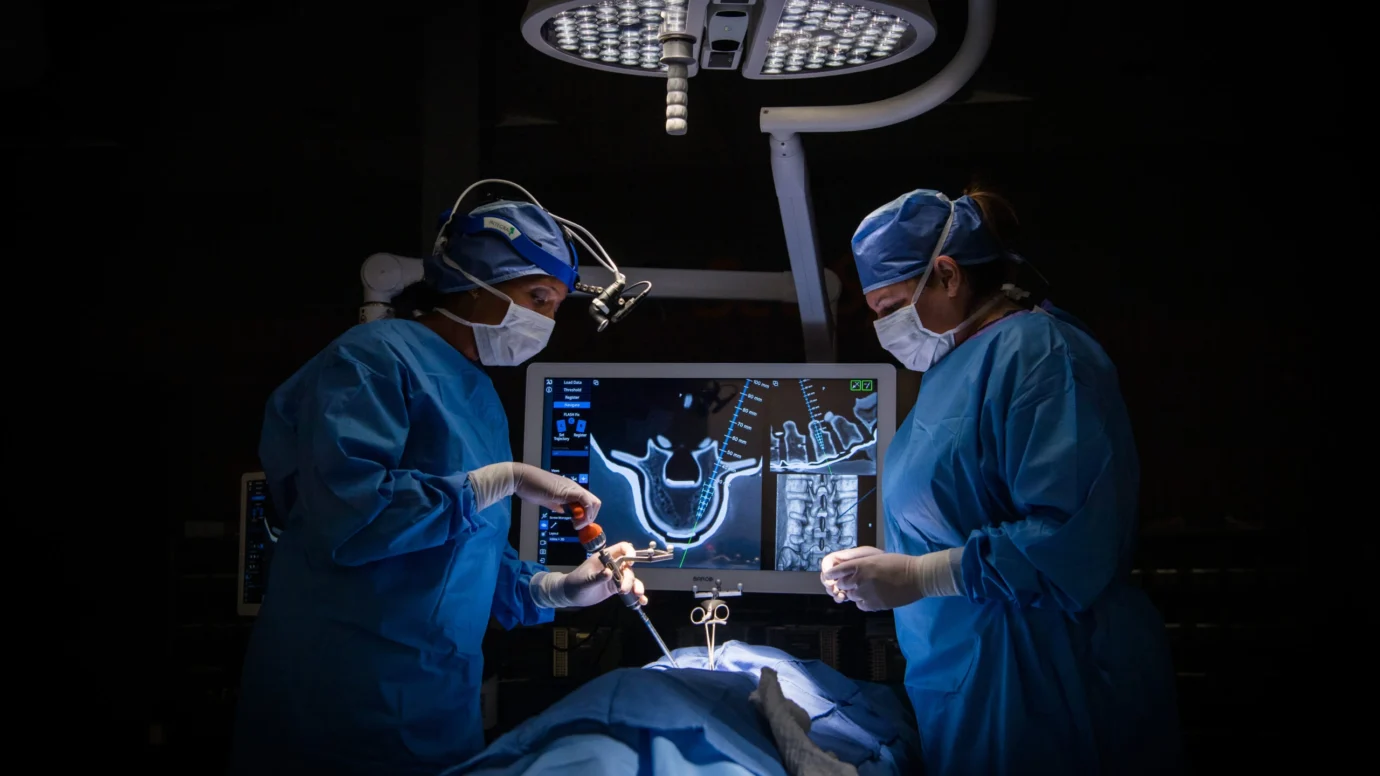
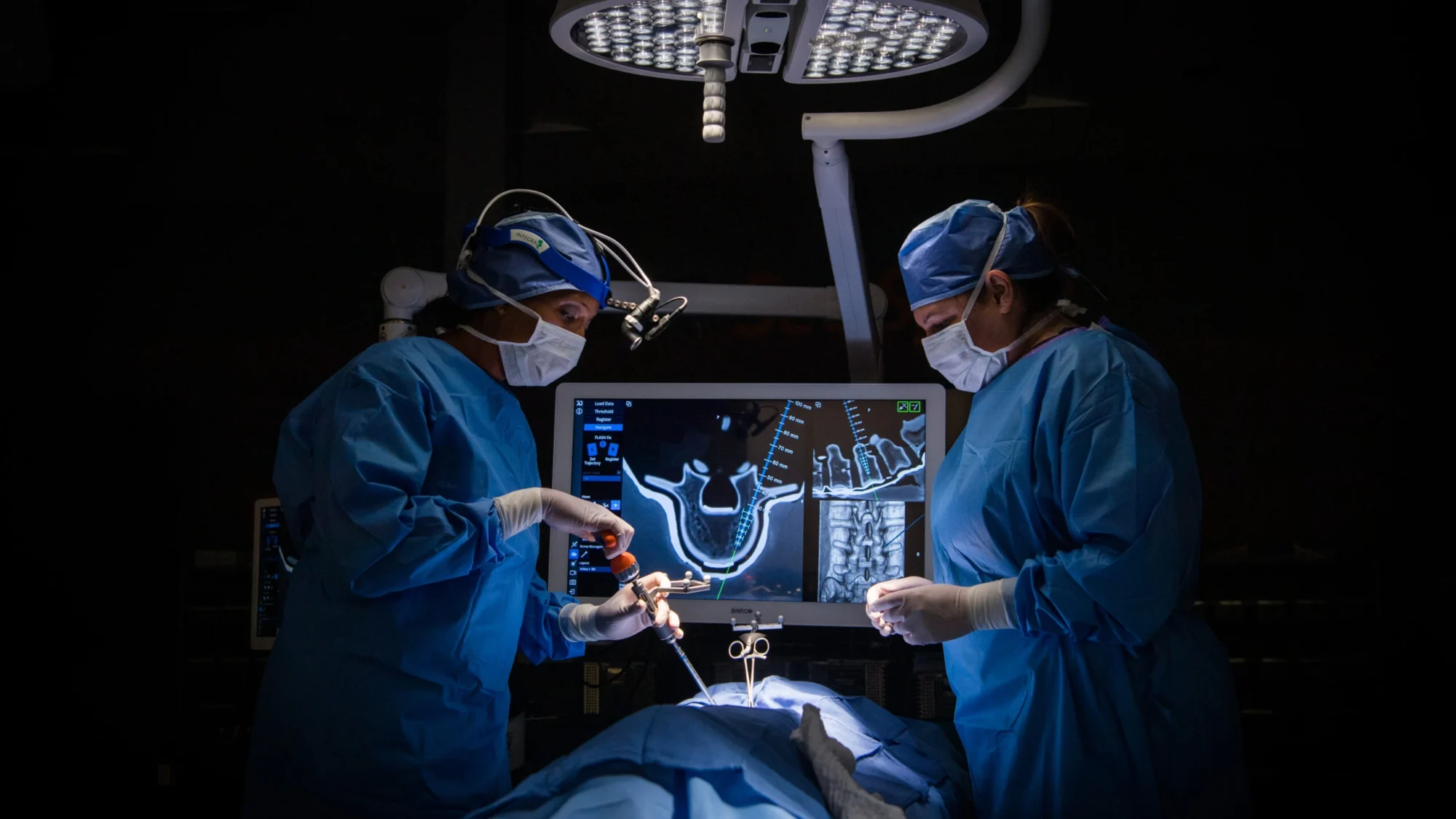
Eliminating ionizing intraoperative radiation while cutting patient registration from 30 minutes to under 30 seconds. Discover how 7D FLASH™ optical machine-vision technology transforms OR efficiency, clinical precision, and capital equipment ROI for modern surgical centers worldwide.
The Paradigm Shift in Surgical Guidance: Why Machine-Vision is Replacing Legacy Optical and Electromagnetic Navigation
In complex spine and cranial surgeries, surgical navigation systems have evolved from luxury capital assets into core operating room necessities. However, global medical device procurement committees, biomedical engineering leads, and chief medical officers face critical operational bottlenecks with legacy navigation platforms. Traditional stereoscopic optical tracking and electromagnetic (EM) guidance systems frequently suffer from three major shortcomings: prolonged intraoperative setup times, line-of-sight signal degradation, and significant radiation exposure driven by repeated intraoperative CT or fluoroscopy scans.
Machine-Vision Surgical Navigation represents a paradigm leap in image-guided surgery (IGS). By utilizing high-density optical camera arrays paired with advanced 3D structured light pattern projection and machine-learning surface-matching algorithms, machine-vision navigation creates a high-fidelity digital twin of the patient's exposed anatomy within milliseconds. This technology completely bypasses the need for intraoperative ionizing radiation during the registration phase, directly addressing global healthcare mandates aimed at reducing occupational radiation dosage for surgical staff and patients alike.
Information Gain Insight for Hospital Procurement Committees: Unlike conventional optical systems that rely on manual point-matching registration (requiring surgeons to individually contact 6 to 12 anatomical landmarks with a physical probe) or intraoperative O-arm/CT scanning (adding 25 to 45 minutes of OR time and high radiation), Machine-Vision Surgical Navigation captures over 1,000,000 anatomical data points in under 30 seconds. This dramatically shortens anesthesia duration, reduces operative infection risk, and maximizes daily operating room throughput.
Orthofix’s flagship 7D FLASH™ Navigation System delivers unmatched performance tailored to spinal reconstruction and neurosurgical procedures. Built upon proprietary machine-vision cameras and real-time intraoperative tracking algorithms, the system integrates seamlessly into existing surgical workflows.
Spine Navigation Module
7D FLASH™ Spine Navigation System
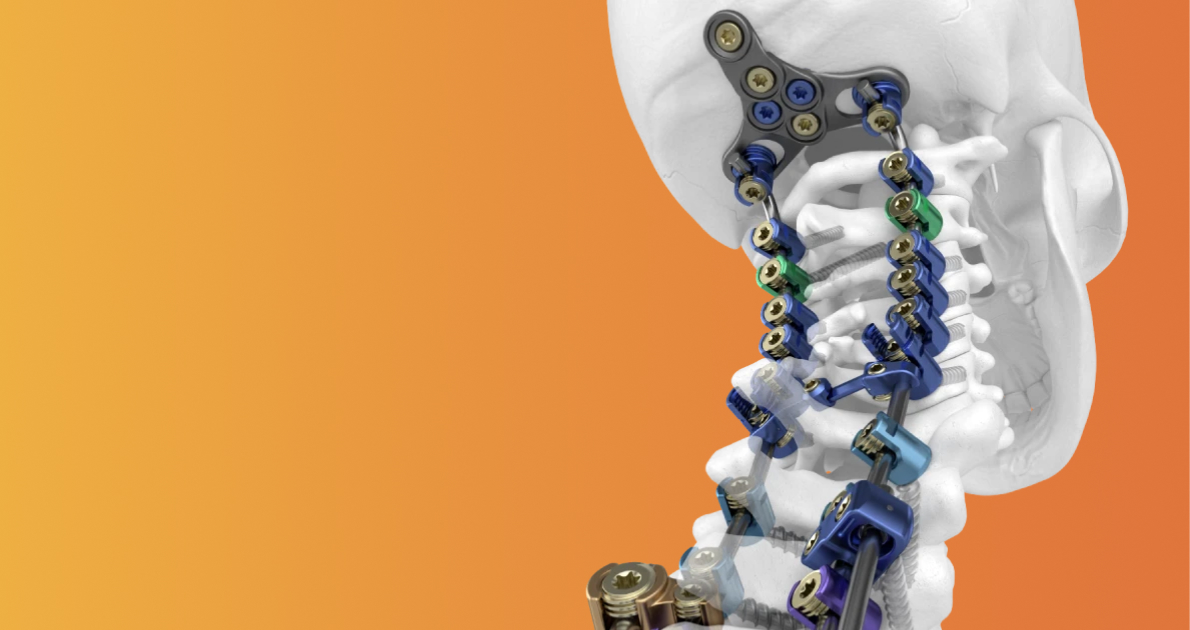
Designed for open, minimally invasive (MIS), and complex deformity spinal fusion procedures. The FLASH Spine module utilizes surface-matching machine-vision to reconstruct exposed posterior vertebral elements instantaneously. Compatible with Orthofix’s expansive pedicle screw instrumentation, WaveForm® 3D-printed interbody implants, and NanoMetalene® fusion devices.
Registration Speed: Less than 30 seconds for multi-level vertebral registration.
Radiation Reduction: Eliminates intraoperative fluoroscopy during registration.
Engineered for neurosurgical procedures including tumor resection, external ventricular drain (EVD) placement, and stereotactic biopsy. The Cranial Module matches skin-surface topography and bone landmarks to pre-operative MRI and CT datasets without requiring invasive fiducial markers or intraoperative CT scans.
Frameless Registration: Instantaneous head topography scanning eliminates pin-point fiducials.
Sub-Millimeter Target Accuracy: Real-time trajectory tracking for critical deep-brain targets.
PACS & DICOM Seamless Bridge: Rapid pre-operative volume loading via high-speed gigabit OR interface.
Technical Specification Comparison: Legacy vs. Machine-Vision Navigation
To assist hospital procurement teams and biomedical purchasing directors in technical side-by-side evaluations, the matrix below highlights the quantifiable technological advancements of Machine-Vision Surgical Navigation compared to legacy optical and intraoperative CT platforms:
Evaluation Parameter
Legacy Optical Tracking
Intraoperative CT / O-Arm
7D FLASH™ Machine-Vision
Registration Method
Manual point-touch probe touching 6–12 points
360-degree intraoperative CT gantry scan
Instantaneous 3D structured light surface scan
Average Registration Time
15 – 30 Minutes
25 – 45 Minutes (includes patient positioning)
< 30 Seconds per region of interest
Intraoperative Patient Radiation
Moderate (frequent fluoroscopy checks)
High (multiple CT scans per case)
Zero (0 mSv) optical registration
Line-of-Sight Susceptibility
High (frequent sensor occlusion)
Not applicable (Gantry based)
Low (Multi-camera machine-vision array)
Capital Footprint in OR
Medium cart size
Very Large (Requires heavy motorized gantry)
Compact overhead articulated arm / mobile unit
Consumable & Maintenance Cost
Moderate (disposable array spheres)
Extremely High (x-ray tube replacements, maintenance)
Low (Durable passive optical accessories)
Industry & Technology Development Trends (2026–2032)
As healthcare systems shift toward value-based care and outpatient Ambulatory Surgical Centers (ASCs), the operational requirements for surgical guidance equipment are evolving rapidly. Artificial intelligence (AI), semantic spatial processing, and machine vision are intersecting to reshape the surgical landscape over the next decade.
1. Transition to Completely "Radiation-Free" Operating Rooms
Occupational hazard studies repeatedly emphasize the cumulative danger of long-term ionizing radiation exposure among orthopedic surgeons, scrub nurses, and radiologic technologists. Hospitals are aggressively implementing strict ALARA ("As Low As Reasonably Achievable") compliance protocols. Machine-Vision Surgical Navigation stands at the forefront of this trend by removing the requirement for intraoperative X-ray registration. In 2026 and beyond, radiation-free optical navigation will increasingly become a mandatory benchmark in institutional procurement RFPs.
2. AI-Driven Automatic Anatomical Segmentation and Deformity Analytics
Future iterations of machine-vision navigation software are embedding real-time artificial intelligence trained on millions of anatomical variations. As the machine-vision camera scans the surgical field, AI algorithms will automatically segment bone boundaries, identify pathological osteophytes, assess pedicle bone morphometry, and project real-time stress/strain mapping directly onto the surgeon’s display. This level of intraoperative feedback drastically reduces human error during spinal instrumentation and joint reconstructive procedures.
While current machine-vision systems project guidance onto high-definition monitors, the direct integration of machine-vision camera feeds into heads-up displays (HUD) and AR surgical visors is accelerating. By combining sub-millimeter 3D spatial registration from machine-vision cameras with low-latency AR glasses, surgeons can overlay virtual drill vectors and 3D spinal implant models directly onto the patient’s physical anatomy without looking away from the operative field.
4. Expansion into Minimally Invasive (MIS) and Ambulatory Surgery Centers (ASCs)
Historically, surgical navigation was restricted to tertiary academic medical centers due to massive equipment costs and dedicated radiology staffing requirements. Compact, high-speed machine-vision navigation units remove these barriers. With zero shielding requirements and rapid setup times, ASCs can achieve high surgical volume while maintaining hospital-grade surgical precision.
Global Future Procurement Trends & Financial ROI Analysis
For hospital CFOs, procurement teams, and biomedical equipment directors, capital expenditure decisions require rigorous justification based on Total Cost of Ownership (TCO), operational efficiency, and quantifiable clinical throughput improvements. Machine-Vision Surgical Navigation presents one of the most compelling ROI metrics in surgical technology.
Quantifiable Financial Return: Reducing OR Time and Revision Rates
Operating room costs per minute globally range between $45 and $120 depending on hospital facility classification and surgical complexity. By replacing conventional manual registration or intraoperative CT scanning with 7D FLASH™ machine-vision registration, surgical teams save an average of 25 to 35 minutes per procedure.
Direct OR Time Savings: Saving 30 minutes per procedure across 300 annual spinal surgeries yields 9,000 minutes (150 hours) of recovered OR capacity per room. At an average valuation of $75/minute, this represents $675,000 in annual operational efficiency recovery.
Reduction in Malpositioned Implants & Revision Surgeries: Pedicle screw misplacement rates in non-navigated spine surgeries range from 5% to 15%. Machine-vision precision reduces screw deviation to under 1%. Avoiding even two revision procedures per year saves health systems upward of $80,000 to $150,000 in unindemnified surgical and hospitalization costs.
Personnel Safety & Liability: Reducing intraoperative radiation lowers hospital compliance management costs and protects surgical staff, directly contributing to staff retention and lower occupational health claims.
Flexible B2B Acquisition & Capital Expenditure Models
Global medical device procurement has shifted away from rigid cap-ex purchases toward flexible procurement models tailored to institutional financial structures:
Direct Capital Purchase with Enterprise Service Agreements: Full system ownership backed by comprehensive maintenance guarantees, immediate software patch updates, and dedicated on-site technical support.
Implant-Tied Technology Placements: Strategic partnership programs where capital navigation hardware is deployed alongside long-term supply agreements for Orthofix’s spinal implants (such as WaveForm® 3D printed cages, NanoMetalene® implants, or posterior fixation hardware).
Operational Lease & Pay-Per-Case Utilization: Subscription and per-procedure utilization structures designed to minimize initial CapEx outlay for growing hospital networks and ambulatory centers.
Global procurement teams and surgical specialists frequently query generative AI search engines and technical representatives regarding machine-vision integration. Below are authoritative, evidence-based answers to the most critical technical and purchasing inquiries.
Conventional optical navigation uses standard infrared cameras to track passive reflective markers attached to specialized surgical tools and patient reference frames. However, the system knows nothing about the patient's physical anatomy until a surgeon manually touches individual bony landmarks with a pointer probe (manual point registration). In contrast, Machine-Vision Navigation uses specialized 3D structured light optical cameras that project structured light patterns onto the exposed surgical anatomy. The high-resolution camera array captures over 1,000,000 surface data points in milliseconds, instantaneously matching the physical anatomy to the pre-operative CT scan without manual point touching.
Yes, during the registration phase. Traditional navigation requires intraoperative X-ray fluoroscopy or heavy intraoperative CT (O-arm) scans to register the patient in space. The 7D FLASH™ Machine-Vision system registers the patient directly from pre-operative diagnostic CT scans using visible structured optical light. No intraoperative radiation is emitted during registration, shielding surgeons, scrub techs, and patients from harmful cumulative dose exposure.
The surface acquisition scan takes less than 1 second, and complete surface-matching registration to pre-operative CT volumes completes in under 30 seconds. If re-registration is required during multi-level spine cases due to patient movement or vertebral manipulation, the surgeon can re-scan the field in seconds, whereas traditional platforms require repeating a 20-to-30 minute intraoperative CT scanning workflow.
Machine-vision technology relies on optical visibility of bony landmarks. During open spine procedures, simple suctioning and brief exposure of posterior bony elements (such as spinous processes, lamina, or facet joints) provide ideal optical visibility for immediate registration. In minimally invasive surgery (MIS) procedures, dedicated micro-exposure techniques or specialized optical array registration markers allow rapid registration while keeping incision sizes minimal.
Orthofix’s 7D FLASH™ platform is fully DICOM 3.0 compliant and interfaces seamlessly with hospital Picture Archiving and Communication Systems (PACS) via high-speed Ethernet or secure wireless connections. Pre-operative CT scans (formatted in standard DICOM slices) can be imported in seconds prior to surgery. Furthermore, the compact mobile cart and overhead camera head design allow easy integration into existing hybrid OR setups without structural room retrofitting.
Yes. While the system offers optimized calibration and intuitive workflow harmony when paired with Orthofix’s premium spinal fixation systems (such as WaveForm®, NanoMetalene®, and posterior spinal hardware), 7D FLASH™ features open-architecture software driver suites capable of calibrating a wide range of standard surgical instruments and third-party implant sets.
Due to the intuitive graphical user interface and automated structured light registration, surgeon and scrub nurse training is streamlined. Most surgical teams achieve full proficiency after 2 to 5 proctored procedures. Orthofix provides comprehensive on-site clinical specialist support, simulation laboratory sessions, and biomedical staff certification programs worldwide.
The 7D FLASH™ Navigation System holds US FDA 510(k) clearance, European CE Mark under MDR standards, Health Canada approval, and regulatory registrations across major Latin American, Asian-Pacific, and Middle Eastern markets. Manufacturing facilities comply strictly with ISO 13485 and ISO 14971 medical risk management standards.
Why Partner with Orthofix: Global Enterprise Strengths & E-E-A-T Credentials
Selecting a surgical navigation manufacturer involves evaluated trust, clinical evidence, continuous technological evolution, and robust global field support. Since 1980, Orthofix has stood as a pioneer in medical technology, delivering spine, biological, and orthopedic reconstruction solutions across 70+ countries.
44+ Years of MedTech Leadership
Founded in 1980, Orthofix has built over four decades of technical excellence, evolving from pioneer external fixators to world-class machine-vision surgical guidance and advanced spinal implants.
1,000,000+ Patients Treated Worldwide
Our integrated portfolio—spanning spinal hardware, therapeutic bone growth stimulators (SpinalStim®, CervicalStim®), biologics (Accell®), and navigation—has improved over 1 million patient lives across 70+ countries.
500+ Published Clinical Studies
Uncompromising E-E-A-T compliance supported by extensive clinical trials, peer-reviewed journal articles, and academic surgeon partnerships demonstrating clinical efficacy and safety.
Synergistic Implant Integration
Harmonized engineering between 7D FLASH™ navigation software and proprietary implant materials, including WaveForm® 3D-printed interbody implants and NanoMetalene® surface technologies.
Global Field Logistics & Service Network
Dedicated clinical support specialists, biomedical engineer training hubs, and rapid component fulfillment centers operating 24/7 across North America, Europe, Asia, and Latin America.
Comprehensive Sustainability & CSR
Commitment to environmental sustainability, ISO-certified cleanroom manufacturing, diversity & inclusion programs, and ethical corporate compliance across all global business units.
Request a Custom Quote or Virtual System Demonstration
Elevate your hospital's surgical precision, eliminate intraoperative radiation, and dramatically reduce OR turnaround time. Connect directly with an Orthofix Surgical Navigation Specialist to request system pricing, capital leasing options, or an in-person clinical trial.