FLASH EVD Cranial Navigation Platform: The Definitive B2B Procurement & Clinical Integration Guide for Next-Gen Machine-Vision Neuro-Navigation
Transforming bedside and operating room ventriculostomy with 7D machine-vision optical registration, zero intraoperative radiation exposure, and rapid sub-30-second stereotactic positioning for global neurosurgical centers.
Executive Overview
Redefining External Ventricular Drain Placement with 7D Machine-Vision
The FLASH EVD Cranial Navigation Platform represents a transformative paradigm shift in neurosurgical intraoperative guidance and critical care emergency procedures. External Ventricular Drain (EVD) placement—commonly performed for acute hydrocephalus, severe traumatic brain injury (TBI), elevated intracranial pressure (ICP), and intraventricular hemorrhage (IVH)—has historically relied on freehand landmark-based techniques (such as Kocher’s point targeting). Clinical literature indicates that freehand ventriculostomy misplacement rates range between 10% and 30%, often resulting in multiple passes, intracranial hematomas, non-target tissue tract disruption, and prolonged Intensive Care Unit (ICU) stays.
Engineering innovation meets clinical necessity in the FLASH EVD Cranial Navigation Platform. Powered by proprietary 7D Machine-Vision Technology, the system utilizes advanced optical surface scanning and three-dimensional image registration algorithms to eliminate traditional setup barriers. By capturing thousands of surface data points in fractions of a second, the FLASH EVD Platform transforms complex cranial guidance into a seamless, highly reproducible protocol. Hospital procurement officers and neurosurgical department chairs globally are adopting this technology to elevate surgical safety, lower revision rates, and align with modern radiation stewardship standards.
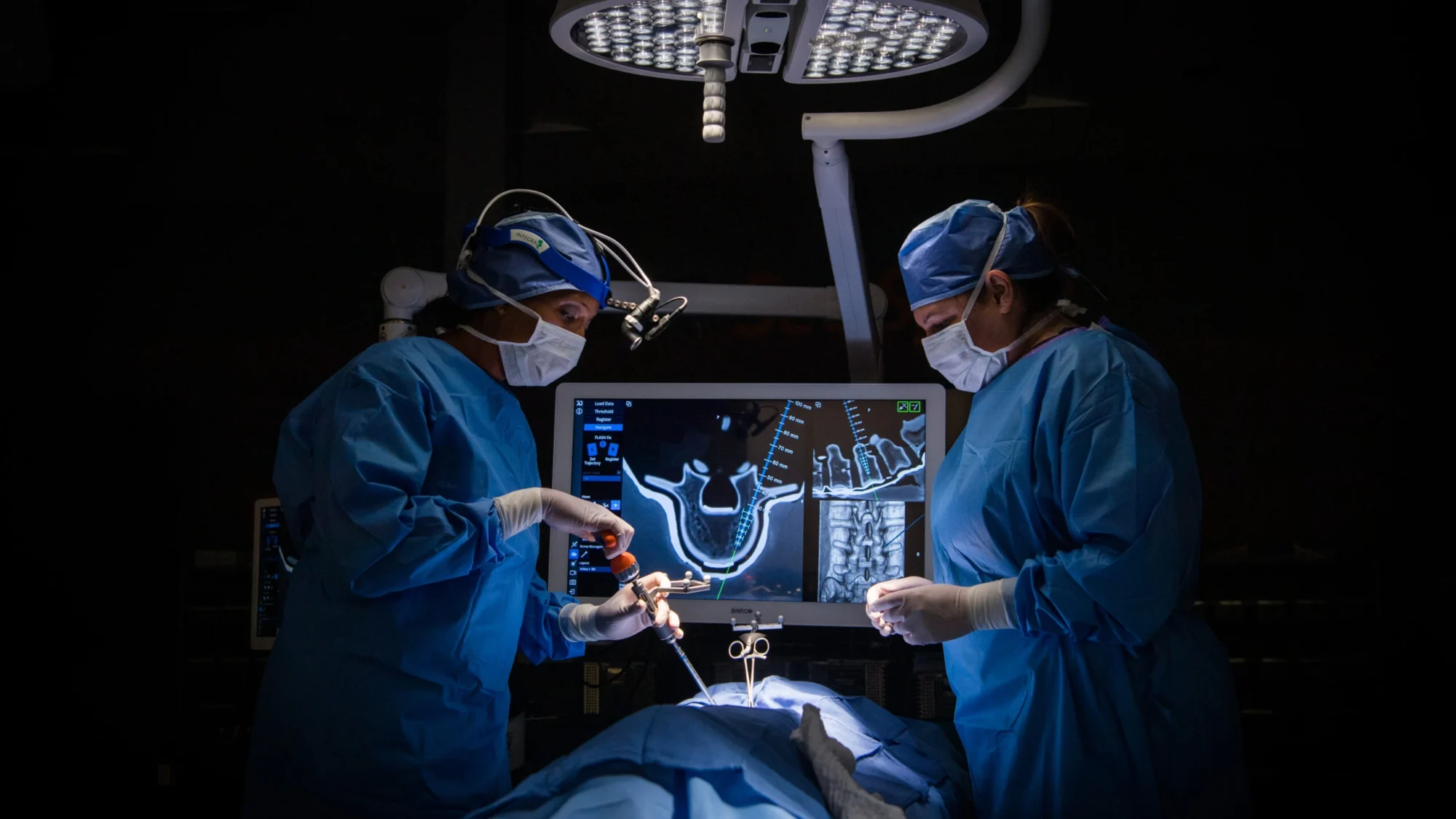
Information Gain: Eliminating the Radiation Burden in Emergency Cranial Navigation
Unlike legacy stereotactic frames or intraoperative fluoroscopy/CT-dependent navigation units, the FLASH EVD Platform requires zero radiation for patient registration. Conventional optical systems demand time-consuming manual point matching, line-of-sight setup, and intraoperative ionizing radiation scans that expose surgical staff and patients to unnecessary cumulative doses. The FLASH system captures full surface topology nearly instantaneously, delivering zero-radiation registration in as little as 30 seconds—saving precious clinical time during critical trauma resuscitation and acute brain decompression.
Product Overview & Technical Architecture
The FLASH EVD Cranial Navigation Platform is built upon an integrated hardware and software architecture engineered specifically for the neurosurgical suite and critical care environment. The platform seamlessly bridges pre-operative DICOM imaging (CT/MRI) with real-time intraoperative optical mapping.
Core components of the platform include:
- 7D Machine-Vision Optical Head: High-resolution, multi-camera sensor array emitting structured non-ionizing light patterns across the patient's cranial landscape to calculate coordinate geometry automatically.
- FLASH Cranial Software Module: Proprietary algorithmic suite executing rapid surface-matching segmentation, trajectory computation, real-time tool position verification, and ventriculostomy target volume calculation.
- Dynamic Spatial Tracking Reference: Specialized array that maintains sub-millimeter positional fidelity even during subtle patient movement or table adjustments.
- Sterile EVD Guidance Toolset: Ergonomic, autoclavable instrument set incorporating integrated optical tracking geometry for smooth catheter advancement along pre-planned trajectories to the Foramen of Monro.
- Full DICOM 3.0 & Hospital PACS Connectivity: Automated bidirectional network transfer ensuring rapid image ingestion directly from emergency department trauma scanners.
System Comparison & Technical Matrix
To assist hospital procurement teams and technology evaluation committees, the following matrix compares the FLASH EVD Cranial Navigation Platform against traditional neuro-navigation modalities:
| Specification / Parameter | FLASH EVD Navigation Platform | Legacy Optical Frameless Stereotaxy | Electromagnetic (EM) Navigation | Freehand Bedside Placement |
|---|---|---|---|---|
| Registration Method | 7D Machine-Vision Surface Scan | Manual Point-Pair & Touch-Pointer | Field Generator & Surface Pointer | Landmark-based (Visual Estimate) |
| Registration Time | < 30 Seconds | 15 – 30 Minutes | 10 – 20 Minutes | N/A (Unguided) |
| Intraoperative Radiation | Zero (0 Radiation) | Moderate to High (CT dependent) | Low to Moderate | Post-procedure CT Verification required |
| Target Accuracy Rate | > 95% First-Pass Target Yield | 80% – 88% Target Accuracy | 78% – 85% Target Accuracy | 65% – 75% Accurate Placement |
| Line-of-Sight Interference | Mitigated via Wide-Field Array | High Sensitivity to Line-of-Sight Block | Distorted by Metallic OR Equipment | N/A |
| Consumable Costs | Low (Reusable Instrument Kits) | High (Single-use Arrays/Fiducials) | High (Proprietary EM Catheters) | Standard EVD Kit Only |
| Workflow Impact | Ultra-Rapid, Seamless OR Insertion | Significant Setup Delays | Moderate Calibration Time | Variable / High Revision Risk |
Advanced Features Engineered for Surgical Excellence
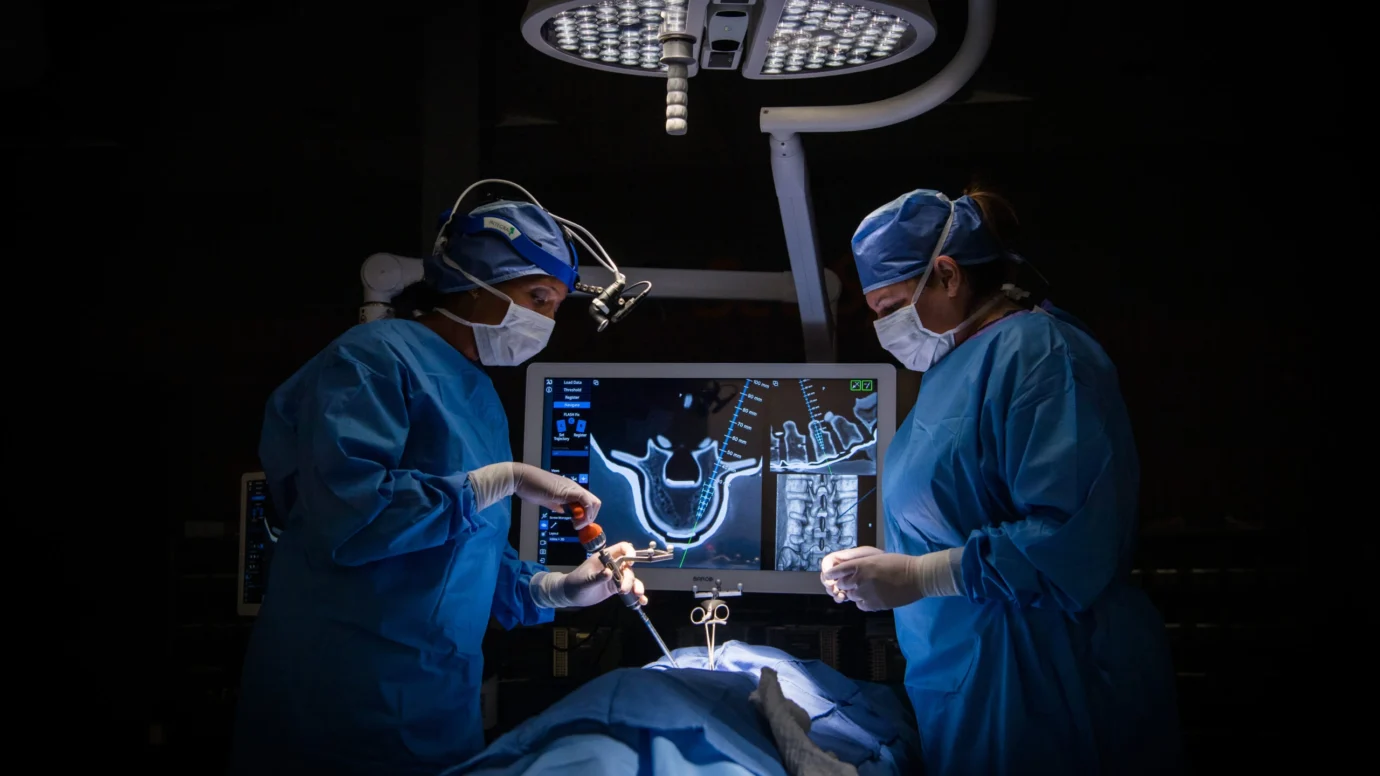
Hospital purchasing committees must evaluate equipment not only on upfront cost but also on operational efficiency and clinical yield. The FLASH EVD Cranial Navigation Platform includes unique feature sets designed to maximize surgical uptime:
- Fiducial-Free Workflow: Eliminates the necessity for pre-operative attachment of invasive scalp fiducials or adhesive markers, enabling instant imaging utilization from emergency department CT scans.
- Real-Time Trajectory Guidance: Displays dynamic depth tracking, angle deviation indicators, and proximity alerts relative to the ipsilateral frontal horn and ventricle boundary.
- Compact Mobile Footprint: Ergonomic cart design with articulated optical arm allows rapid transport between main neurosurgical operating rooms and hybrid neuro-ICU suites.
- Intuitive Touchscreen Interface: Clean, high-contrast user interface engineered for rapid setup by operating room nurses and surgical technicians under emergency conditions.
Future Procurement Trends in Surgical Navigation Platforms
As healthcare systems shift toward value-based reimbursement, hospital equipment acquisitions are subject to rigorous clinical economic evaluations. Procurement directors analyzing the surgical navigation market between 2026 and 2032 are prioritizing platforms that address four key trends:
1. Rapid OR Throughput & Emergency Readiness
Surgical suites are under immense operational pressure to maximize block time utilization. Platforms requiring multi-step registration or intraoperative CT scans create bottlenecks. Machine-vision navigation accelerates setup times, enabling immediate emergency intervention without compromising surgical precision.
2. Strict Occupational ALARA & Radiation Safety Mandates
Health regulatory bodies and hospital safety committees enforce strict As Low As Reasonably Achievable (ALARA) guidelines. Minimizing intraoperative fluoroscopy and ionizing radiation protects surgical teams, nurses, and pediatric/adult patients from long-term scatter radiation exposure.
3. Reduction of Avoidable Revision Surgeries
EVD misplacement frequently causes intraventricular hemorrhage extensions, non-functioning catheter drainage, and mandatory surgical revisions. Guided placement dramatically reduces revision procedures, infection risks, and uncompensated readmission expenses for healthcare institutions.
4. Open-Platform Interoperability & PACS Integration
Modern hospital IT architecture demands seamless DICOM communication, PACS synchronization, and software hardware modularity. Equipment buyers prefer platforms capable of expanding beyond EVD placement into broader cranial, tumor resection, and spine navigation applications.
Industry & Technological Development Trends in Neuro-Navigation
The field of image-guided neurosurgery is experiencing rapid technological evolution. Understanding these structural developments helps hospital executive teams make future-proof capital allocation decisions:
A. Transition from Contact-Based Point Registration to Surface Topology Mapping
Legacy navigation platforms rely on manual touching of anatomical points with a physical pointer probe—a process prone to skin movement artifact, human registration error, and prolonged calibration cycles. The industry standard is shifting toward optical machine vision, where high-density light projections reconstruct patient anatomy non-invasively, achieving superior surface registration speed and repeatable sub-millimeter geometry.
B. AI-Driven Target Segmentation and Ventricular Trajectory Calculation
Artificial Intelligence (AI) algorithms integrated into software suites allow automated detection of collapsed or dysmorphic ventricles on pre-operative scans. In complex hydrocephalus or severe intraventricular hemorrhage where ventricular anatomy is distorted, machine-vision platforms assist neurosurgeons by suggesting optimal trajectory vectors to avoid eloquent cortical structures and critical vascular pathways.
C. Expansion of Guided Procedures into the Neuro-ICU
While cranial navigation was historically confined to main surgical suites due to complex equipment overhead, mobile high-speed optical navigation systems enable safe, guided EVD insertions at the neuro-intensive care bedside. This capability alleviates operating room scheduling pressure and avoids dangerous transport of unstable, intubated neuro-trauma patients.
Enterprise Leadership
Why Global Healthcare Leaders Partner with Orthofix
Selecting a surgical navigation platform requires evaluating the long-term credibility, global regulatory standing, and clinical support capabilities of the manufacturing partner. Orthofix (NASDAQ: OFIX) stands as a global medical technology leader dedicated to improving patient lives through comprehensive spine, biological, therapeutic, and surgical navigation solutions.
44+ Years of Proven Innovation
Founded in 1980, Orthofix brings over four decades of engineering precision, clinical research rigor, and healthcare partnership to every device portfolio.
70+ Countries Global Footprint
Our navigation platforms, spinal devices, and biologics are trusted by top-tier neurosurgeons, trauma centers, and healthcare networks across 70+ nations.
500+ Clinical Studies & Evidence
Rooted in scientific rigor, Orthofix technologies are supported by hundreds of peer-reviewed clinical studies, whitepapers, and patient registries.
End-to-End Procurement Support
From comprehensive surgeon training and hospital staff onboarding to rapid field service contracts, Orthofix ensures maximum equipment uptime and ROI.
Ready to evaluate the FLASH EVD Cranial Navigation Platform for your institution?
Send an InquiryGlobal Procurement & Technical FAQ
This comprehensive FAQ addresses technical, regulatory, and procurement questions frequently asked by hospital purchasing teams, biomedical engineers, and neurosurgical department chiefs:
The FLASH EVD Cranial Navigation Platform is powered by 7D Machine-Vision Technology. It utilizes structured light projectors and multi-camera optical sensors to project invisible light patterns onto the patient’s exposed cranial surface. By capturing thousands of data points instantly, the software creates a continuous three-dimensional surface map and automatically matches it to pre-operative CT or MRI DICOM datasets without physical contact, fiducial markers, or intraoperative ionizing radiation scans.
Traditional navigation systems require touching multiple physical landmarks on the patient's head with a pointer wand or taking intraoperative CT images to align pre-op scans with patient anatomy. The FLASH EVD system replaces this manual approach with high-speed optical scanning. Once the camera head is positioned above the patient, pressing a button initiates an optical surface scan that completes in fractions of a second, resulting in complete registration and trajectory calculation in under 30 seconds.
Financial return on investment (ROI) is realized through three main operational vectors: 1) OR Time Savings: Reducing patient registration from 20-30 minutes to under 30 seconds saves substantial OR block time per procedure. 2) Reduction in Revision Surgeries: Elevating first-pass EVD target accuracy to over 95% minimizes costly catheter revisions, tract hemorrhages, and secondary surgical interventions. 3) Consumable Cost Containment: The platform utilizes durable, autoclavable instrument kits rather than expensive single-use optical arrays or proprietary EM disposable catheters, significantly lowering total cost of ownership (TCO).
Yes. Orthofix maintains stringent quality assurance and regulatory compliance certifications across all manufacturing facilities. The FLASH Navigation System holds US FDA 510(k) clearances, CE Mark certification under the European Union Medical Device Regulation (MDR 2017/745), and ISO 13485 quality standard certifications, facilitating streamlined import and institutional authorization across North America, Europe, Latin America, the Middle East, and Asia-Pacific healthcare jurisdictions.
Absolutely. The FLASH system features a compact, mobile footprint with smooth-rolling lockable casters and an integrated overhead optical arm. This ergonomic cart architecture allows seamless transport between main operating rooms, trauma bays, and Neuro-ICU bedside units, allowing clinicians to perform precise, guided ventriculostomies wherever emergency patient care demands.
Orthofix provides complete, white-glove institutional implementation programs. This includes on-site surgical staff and nursing team education, hands-on clinical simulation training, dedicated clinical application specialist support during initial cases, scheduled preventive maintenance, rapid-response hardware replacement SLAs, and continuous software updating throughout the device lifecycle.
The FLASH Cranial Software includes advanced 3D volumetric rendering and cross-sectional slice guidance. In severe traumatic brain injury or intracranial hypertension where ventricles are compressed or shifted off midline, the software overlays the pre-operative DICOM dataset onto real-time patient space, allowing the surgeon to plan and execute complex entry vectors directly into small or shifted ventricular target volumes with sub-millimeter alignment.
Hospital purchasing officers, biomedical engineering heads, and neurosurgical department representatives can initiate immediate contact with an Orthofix Surgical Navigation Specialist by clicking the inquiry button below or selecting the live chat widget to request official specifications, clinical literature, ROI calculator models, or on-site equipment evaluations.