Choosing among CervicalStim Bone Growth Therapy Device suppliers requires more than comparing prices and delivery dates. Hospitals, clinics, and qualified distributors must examine evidence, manufacturing standards, and patient-support practices. A dependable supplier should clearly identify the device’s intended use, prescribing requirements, warranty terms, and service coverage. Details matter. Product documentation should be current, readable, and consistent across official channels. Suppliers should also explain training procedures, replacement policies, and technical assistance for clinicians. These points can reveal whether a company supports safe, informed use beyond the initial sale.
This overview considers leading suppliers through a practical and evidence-aware lens. It examines regulatory transparency, quality systems, clinical education, distribution reliability, and communication with healthcare professionals. Availability may differ by country, and local requirements always deserve confirmation. That is not a minor issue. Buyers should verify product status with authorized representatives and relevant health authorities before purchasing. Independent clinical judgment remains essential, especially when patient history, imaging results, or concurrent treatment may influence suitability. A polished website does not prove clinical value. Nor does a low quotation guarantee dependable service. Some supplier information may be incomplete or difficult to compare, which deserves honest acknowledgment. Readers should treat rankings as a starting point, not a final recommendation. The strongest choice balances credible documentation, responsive support, and appropriate clinical oversight.
What Is CervicalStim Bone Growth Therapy?
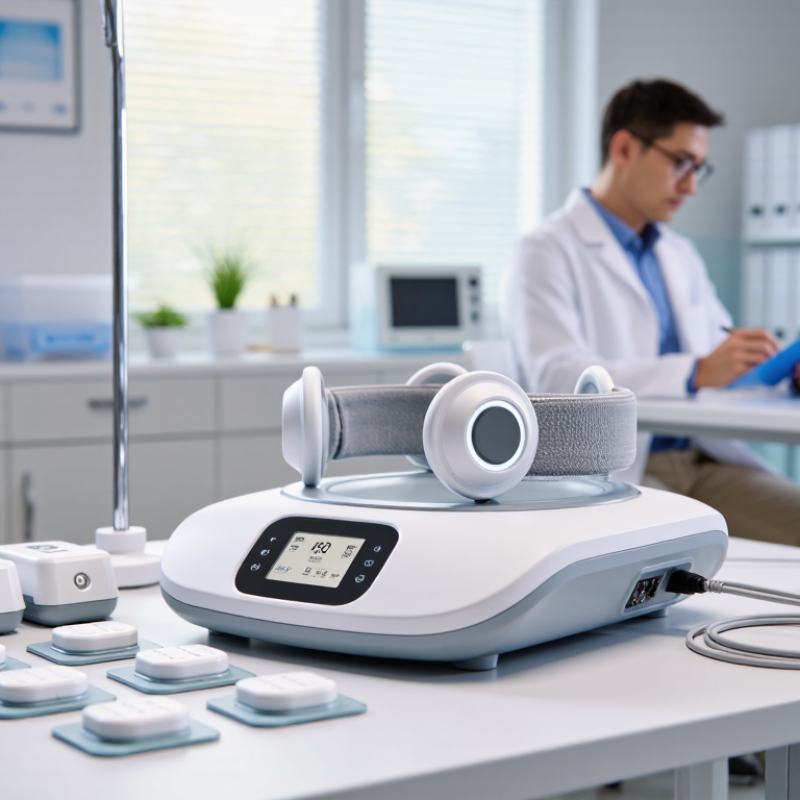
CervicalStim bone growth therapy refers to a noninvasive treatment that uses low-level electromagnetic pulses near the neck. Clinicians may prescribe it after cervical spinal fusion surgery when bone healing needs additional support. The device usually fits around the neck or attaches to a cervical collar. It delivers scheduled stimulation while the patient rests or performs light daily activities.
This therapy does not remove hardware, repair nerves, or replace surgery. Its purpose is narrower: it may encourage the biological processes involved in bone fusion. Treatment schedules vary by device, surgical plan, and patient condition. A surgeon or qualified healthcare professional should explain positioning, duration, skin care, and follow-up imaging. Patients should report unusual pain, skin irritation, dizziness, or device problems promptly.
The technology sounds simple. Daily use can be less simple. A collar may feel awkward under clothing, and missed sessions can weaken adherence. Evidence may also differ among patients, procedures, and study designs. That uncertainty deserves honest discussion, not exaggerated promises. People with implanted electronic devices, pregnancy concerns, or other medical conditions should ask their clinician whether electromagnetic stimulation is appropriate. The most reliable results come from combining prescribed therapy with follow-up visits, medication guidance, smoking avoidance, and realistic expectations.
Top CervicalStim Bone Growth Therapy Device Suppliers - What Is CervicalStim Bone Growth Therapy?
| Data Dimension | Verified Therapy or Product Information | Supplier Evaluation Requirement | Procurement Relevance |
|---|---|---|---|
| Therapy Category | Non-invasive bone growth stimulation used as an adjunct to support bone healing after selected spinal fusion procedures. | The supplier should clearly identify the device as a medical bone-growth stimulator and provide its intended-use statement. | Helps buyers distinguish prescription medical devices from general wellness or rehabilitation products. |
| Energy Modality | Pulsed electromagnetic field therapy, commonly abbreviated as PEMF, is used by external bone-growth stimulation systems. | Technical documentation should describe the electromagnetic output, operating mode, and applicable safety specifications. | Supports comparison of technology, clinical indications, and electromagnetic compatibility requirements. |
| Application Site | Cervical systems are designed to position the therapeutic field around the neck and cervical spine region. | The supplier should provide fitting instructions, positioning guidance, and product dimensions for cervical use. | Proper positioning is important for treatment consistency and user comfort. |
| Typical Clinical Role | Used under medical supervision as an adjunct to spinal fusion care, particularly when a healthcare professional identifies an elevated risk of non-union. | Suppliers should provide the approved or cleared indication, prescribing information, and clinical-use limitations. | Prevents purchasing teams from treating the device as a replacement for surgery or routine postoperative care. |
| Prescription Status | Bone-growth stimulation devices used for spinal fusion support are generally prescription medical devices in the United States. | The supplier should explain prescription handling, clinician authorization, patient onboarding, and distribution controls. | Important for legal distribution, hospital procurement, and patient access workflows. |
| Treatment Protocol | Usage frequency and treatment duration are determined by the device labeling and the prescribing healthcare professional; they should not be self-selected. | Each shipment should include current instructions for use, patient guidance, and treatment-monitoring information. | Reduces the risk of incorrect usage and supports adherence to the prescribed protocol. |
| Regulatory Evidence | Eligible suppliers should provide applicable regulatory authorization or clearance for the specific cervical bone-growth stimulation indication and market. | Request the relevant regulatory documents, product labeling, device identification, and country-specific registration information. | Regulatory status must be checked by market because authorization varies by jurisdiction and indication. |
| Quality Management | Medical-device manufacturers commonly operate quality systems aligned with ISO 13485 requirements and applicable national regulations. | Ask for a current quality certificate, scope of certification, audit information, and corrective-action process. | Provides evidence that manufacturing, traceability, and complaint handling are controlled. |
| Electrical Safety | Externally powered or battery-operated medical electrical equipment requires appropriate electrical-safety and electromagnetic-compatibility evaluation. | Request applicable test reports or declarations relating to medical electrical equipment safety and electromagnetic compatibility. | Relevant for patient safety, hospital use, and operation near other electronic medical equipment. |
| Patient-Fit Features | A cervical device should be wearable around the neck and designed to maintain the intended treatment position during prescribed use. | Evaluate adjustability, weight, fit range, skin-contact materials, cleaning instructions, and comfort feedback. | Comfort and fit can affect treatment adherence and practical postoperative use. |
| Safety Screening | Patients with implanted electronic devices or other relevant medical conditions may require additional clinical review before electromagnetic therapy. | The supplier should provide contraindications, warnings, precautions, and an implant-device compatibility policy. | Supports safe patient selection and reduces avoidable device-interaction risks. |
| Service and Support | Post-market support may include user training, technical assistance, replacement management, complaint intake, and adverse-event escalation. | Compare response times, service coverage, spare-unit availability, training resources, and escalation procedures. | Reliable support is especially important for postoperative patients and institutional care programs. |
| Documentation Package | A complete package should include labeling, instructions for use, warnings, cleaning guidance, warranty terms, and contact information. | Confirm that documents are current, version-controlled, translated where required, and supplied with every device. | Improves clinical implementation, staff training, and regulatory audit readiness. |
| Evidence Assessment | Bone-growth stimulation is an adjunctive therapy; clinical outcomes depend on patient selection, surgical factors, adherence, and overall postoperative management. | Suppliers should distinguish regulatory claims from peer-reviewed evidence and should not promise guaranteed fusion or healing. | Encourages evidence-based purchasing and prevents misleading clinical or commercial claims. |
| Recommended Buyer Check | Verify Before Purchase | Confirm indication, regulatory authorization, prescription requirements, safety information, warranty, delivery capability, and after-sales support in the target market. | Product specifications and legal requirements can change; final decisions should be reviewed by qualified clinical, regulatory, and procurement professionals. |
FAQS
It is a noninvasive treatment using low-level electromagnetic pulses near the neck.
No. It does not replace surgery, remove hardware, or repair damaged nerves.
The device usually fits around the neck or attaches to a cervical collar.
Ask about fitting, treatment duration, skin care, follow-up imaging, and possible device problems.
Report unusual pain, skin irritation, dizziness, or unexpected device behavior promptly.
Missed sessions can weaken adherence and may reduce the value of the prescribed routine.
Check regulatory clearance, cervical-fusion evidence, electrical specifications, and documented quality controls.
No. ISO 13485 certification can show structured manufacturing controls, but it does not prove clinical superiority.
The device should sit comfortably around the neck, with simple controls and readable status indicators.
Follow-up visits, medication guidance, smoking avoidance, and realistic expectations remain important.
Conclusion
CervicalStim Bone Growth Therapy Device refers to a noninvasive electrical stimulation system designed to support bone healing following cervical spinal fusion. By delivering carefully controlled signals to the treatment area, it may encourage bone-forming activity and help create a more favorable environment for fusion. These devices are generally used as part of a broader care plan that may include surgery, prescribed medication, follow-up imaging, and activity guidance from a qualified healthcare professional.
When comparing suppliers, buyers should review device design, treatment convenience, patient support, service policies, documentation, and compatibility with the intended clinical application. Important considerations also include regulatory clearance in the relevant market, evidence from clinical studies, product quality controls, user instructions, contraindications, and reported safety information. Suppliers should provide transparent technical specifications and reliable assistance without making unsupported healing claims. Patients and healthcare providers should evaluate all options together and select a device based on individual medical needs, professional recommendations, and applicable local regulations.