Knowledge & Insights

Orthofix Clinical Insights & Medical News

Discover advanced surgical techniques, bone stimulation research, and orthopedic device innovations.

Surgical Technologies

Innovations in Precision Surgery

Exploring machine-vision navigation and radiation-reduced operating room solutions.

Patient Outcomes

Evidence-Based Patient Care

Real-world recovery stories and clinical data driving modern orthopedic restoration.

0%

China’s bone graft market is expanding, but supplier quality remains uneven. Grand View Research estimated the global bone grafts and substitutes market at approximately USD 3.4 billion in 2023. It also projected continued growth through 2030, driven by spinal fusion, trauma care, and dental reconstruction. These figures show demand. They do not prove product reliability.

When evaluating an Accell Bone Matrix supplier in China, buyers should examine more than price or catalog images. Manufacturing controls, donor screening, traceability, sterility validation, and clinical documentation require close review. The American Association of Tissue Banks (AATB) emphasizes documented tissue-processing systems and controlled quality procedures. China-based manufacturers should also provide clear evidence of regulatory registration, batch testing, and export experience. Sometimes, the paperwork looks stronger than the practical evidence. That gap deserves attention.

Orthopedic researcher Dr. Thomas A. Einhorn has stated, “Bone grafting is one of the oldest and most commonly used techniques in orthopaedic surgery.” His observation remains relevant because modern biomaterials still depend on biological performance, handling, and surgical context. A credible Accell Bone Matrix supplier should therefore explain graft composition, storage conditions, implantation guidance, and reported outcomes in plain language. Independent verification is essential. The best supplier may not be the cheapest. It may be the one that answers difficult questions, shares consistent batch records, and admits where evidence is still limited.
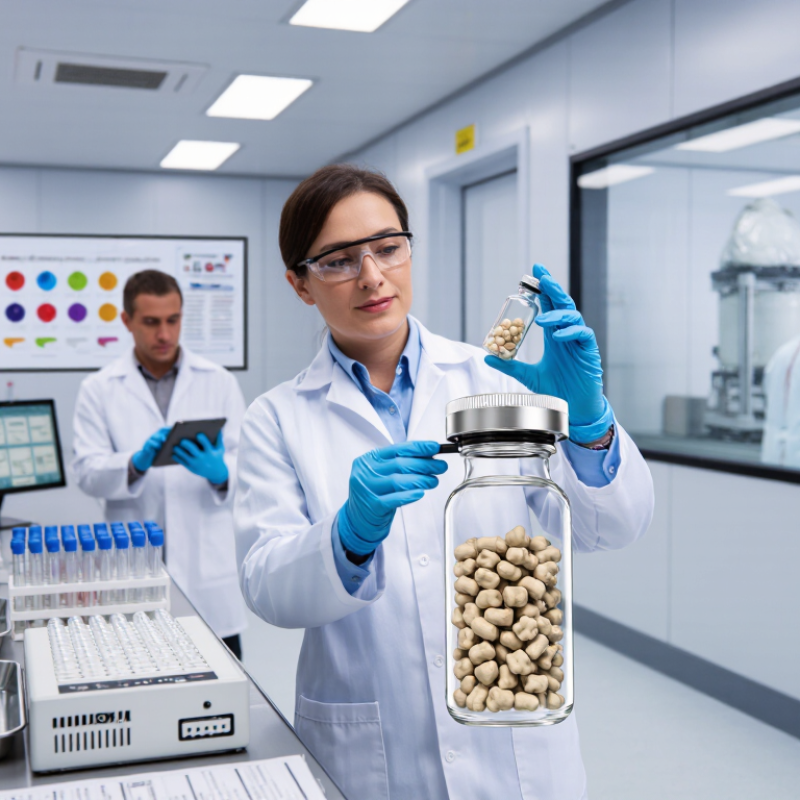
What Is the Best Accell Bone Matrix Supplier in China?

Accell Bone Matrix: Composition, Indications, and Regulatory Classification

What Is the Best Accell Bone Matrix Supplier in China?

Accell bone matrix is generally built from demineralized bone matrix, collagen, and naturally retained bone proteins. Its porous structure may support cellular attachment and new bone formation. Exact composition can vary by processing method, particle size, carrier material, and terminal sterilization. It is commonly considered for spinal fusion, orthopedic reconstruction, trauma repair, and selected dental procedures. Clinical suitability depends on defect size, patient health, and the surgeon’s judgment. Laboratory claims should not replace clinical evidence.

Tips: Ask suppliers for composition data, donor screening records, sterilization validation, shelf-life studies, and batch traceability. Confirm whether the product is classified as a human tissue product, medical device, or another regulated category in the target market. Classification may change by formulation and intended use. This point is often underestimated.

A reliable Chinese supplier should explain its regulatory pathway clearly and provide controlled manufacturing records. Look for quality systems, documented raw-material sources, and independent testing results. Request samples only through compliant channels, with proper storage and transport instructions. A supplier promising universal indications deserves caution. Real products have limits. In practice, documentation can appear complete while key clinical details remain unclear. Careful technical review is necessary before procurement or hospital use.

China Supplier Screening: ISO 13485, GMP, and Full Traceability Evidence

Selecting a reliable bone matrix supplier in China requires more than comparing prices or product photographs. ISO 13485 certification should cover the actual manufacturing site and relevant product scope. Check the certificate number, validity period, issuing body, and registered address. A certificate alone is not enough.

GMP evidence should appear in daily operations. Request controlled-room records, equipment maintenance logs, environmental monitoring results, and staff training files. Review batch documentation from raw material receipt to final release. Each lot should connect to supplier records, test results, packaging data, and shipment history. That is traceability in practice.

Ask for anonymized examples of deviation handling, corrective actions, complaint reviews, and product recalls. Confirm whether raw materials have documented origins and current certificates of analysis. Inspect labels, lot codes, storage conditions, and retention samples during an audit or video inspection. Small gaps matter. A missing signature or unclear revision history may reveal weak document control. However, audits are not perfect, and polished files can hide inconsistent execution. Independent testing and periodic supplier reassessment provide stronger assurance. The best supplier is not simply the one with impressive certificates, but the one that can explain every critical record clearly and consistently.

Quality Benchmarks: SAL 10⁻⁶, USP <71>, and Endotoxin Limits

What Is the Best Accell Bone Matrix Supplier in China?

A reliable bone matrix supplier must prove more than attractive pricing. Sterility assurance level, or SAL 10⁻⁶, means a validated process targets no more than one nonsterile unit per million sterilized units. ISO 11137 and ISO 11737 provide the technical framework for validation and bioburden control. The supplier should show dose mapping, routine monitoring, and batch-release records. A certificate alone is not proof.

USP <71> requires sterility testing with controlled media, negative controls, and incubation periods of at least 14 days. However, this test examines sampled units. It cannot replace process validation. That distinction matters. I would request raw data, deviation records, and laboratory qualification evidence before approving a Chinese manufacturer.

Endotoxin control needs equal attention. USP <85> uses the K/M calculation, with K commonly set at 5 EU/kg for many parenteral applications. The correct limit depends on route, dose, and intended clinical use. Suppliers should report results in EU per device or gram, not only “pass.” ISO 10993-17 can support toxicological evaluation, but it does not excuse weak manufacturing controls. My practical concern is sampling consistency. One clean batch may hide a recurring process problem. Experienced buyers should compare three consecutive lots, inspect storage conditions, and verify traceability from donor material through final packaging.

Supplier Audit: Donor Screening, Batch Consistency, and Sterile Packaging

Choosing the best bone matrix supplier in China requires more than comparing price or catalog photographs. Donor screening is the first control point. An experienced audit reviews consent records, medical history, risk assessment, infectious-disease testing, quarantine, and final release approval. Each donor record should connect to a coded tissue lot. Traceability must work both ways.

Ask for evidence, not promises. Review batch records, sampling plans, identity testing, particle-size distribution, moisture content, bioburden, endotoxin, and sterility results. The WHO Global Report on Infection Prevention and Control (2022) estimated that 7 in 100 acute-care patients in high-income countries acquire at least one healthcare-associated infection. Packaging therefore deserves equal attention. Check validated sealing, sterile-barrier integrity, transit simulation, storage conditions, and package-opening instructions. ISO 11607 provides a useful framework for sterile packaging validation.

Consistency is often harder than the first successful shipment. Compare at least three recent lots, not one attractive sample. Look for stable test methods, controlled deviations, calibrated equipment, and documented corrective actions. Request temperature and humidity records during storage. Verify applicable NMPA documentation and quality-system certification, then confirm the certificate’s scope and expiry date.

A clean certificate is not proof of reliable manufacturing. Supplier audits can miss weak handoffs between laboratories and warehouses. That is the uncomfortable part. Independent testing may be justified before approval, especially when particle size or sterility data appear unusually uniform. Small gaps matter.

What Is the Best Accell Bone Matrix Supplier in China? - Supplier Audit: Donor Screening, Batch Consistency, and Sterile Packaging

Audit Dimension Objective Acceptance Benchmark Required Evidence Criticality Weight
Quality management system Current ISO 13485 certification covering the relevant facility, product scope, and manufacturing activities. Valid certificate, certification scope, latest surveillance-audit report, nonconformity closure records, and change-control procedure. High 10%
Donor eligibility and traceability Documented donor consent, medical-history review, exclusion criteria, tissue-recovery controls, and traceability from donor to finished lot. Anonymized donor files, recovery records, chain-of-custody logs, quarantine status, and one-step-forward/one-step-back traceability test. Critical 15%
Donor infectious-disease screening Validated screening strategy addressing HIV, hepatitis B, hepatitis C, syphilis, and other infections required by the applicable Chinese and destination-market regulations. NAT should be used where required by the regulatory pathway. Approved laboratory list, test methods, assay validation or verification, specimen identity controls, results, retest rules, and rejected-donor records. Critical 15%
Raw-material controls and bioburden Controlled receipt, quarantine, identification, storage temperature, maximum hold time, and documented bioburden controls before processing. Incoming inspection records, environmental monitoring, bioburden trend reports, storage logs, deviation records, and material-status labels. High 8%
Demineralization and process validation Validated process parameters for demineralization, washing, drying, sizing, and any terminal treatment, with defined operating ranges and acceptance limits. Master batch records, process-validation protocols, equipment qualification, in-process controls, alarms, deviations, and reprocessing rules. Critical 12%
Batch-to-batch consistency Established specifications for appearance, particle-size distribution, moisture, residual chemicals, pH or extractables, and other product-specific quality attributes. At least three consecutive commercial-lot certificates of analysis, trend charts, out-of-specification investigations, and retained-sample results. Critical 12%
Biological safety and product characterization Risk-based biological evaluation addressing cytotoxicity, sensitization, irritation or intracutaneous reactivity, systemic toxicity, and other endpoints applicable to the finished device. Biological evaluation plan/report, ISO 10993-based test reports where applicable, chemical characterization, residual-process-agent data, and risk-management linkage. Critical 10%
Sterilization validation Validated sterilization process or validated aseptic-processing strategy. For terminal sterilization, the process should demonstrate the specified sterility assurance level, commonly 10-6 for medical devices when applicable. Sterilization validation report, load configuration, cycle records, dose or exposure mapping, routine-release criteria, and applicable ISO 11135, ISO 11137, or ISO 17665 evidence. Critical 12%
Sterile barrier and packaging integrity Packaging must maintain sterility and product protection through transportation and the claimed shelf life, using a validated sterile-barrier system. Packaging drawings, material specifications, seal-strength and integrity tests, dye or bubble-leak testing where appropriate, shipping simulation, and ISO 11607 evidence. Critical 10%
Shelf-life and distribution controls Shelf-life claims must be supported by real-time or appropriately justified accelerated-aging data, with defined storage and transport conditions. Stability protocol, aging calculations, real-time data, temperature and humidity limits, transport qualification, excursion assessment, and expiry-date rationale. High 4%
Release testing and sterility records Each released lot must have complete, reviewed, and approved records, including applicable sterility, bioburden, endotoxin, identity, and physical or chemical test results. Signed batch-release checklist, laboratory raw data, validated methods, test equipment calibration, laboratory deviations, and quality-unit approval. Critical 7%
Complaints, CAPA, and recall readiness Closed-loop complaint handling, root-cause analysis, corrective and preventive action, adverse-event escalation, and a documented mock-recall process. Complaint log, CAPA effectiveness checks, recall procedure, mock-recall results, response-time records, and trend analysis. High 3%
Recommended supplier-selection rule ≥ 4.0 / 5.0
A supplier should not be approved despite a high total score if any critical gap remains in donor eligibility, infectious-disease screening, process validation, sterilization, sterile-barrier integrity, or batch-release documentation. Final qualification requires review of primary records, product-specific regulatory requirements, and an on-site or remote quality audit.

Final Ranking: Quality, Clinical Data, Capacity, Lead Time, and Total Cost

What Is the Best Accell Bone Matrix Supplier in China?

Final Ranking: Quality, Clinical Data, Capacity, Lead Time, and Total Cost

A reliable ranking should begin with quality, not a low quotation. I would review raw material controls, batch testing, sterility procedures, traceability, and packaging integrity. Samples should match the final production process. A polished sample proves little.

Clinical data deserves equal attention. Look for published studies, transparent test methods, and documents that connect product specifications with intended clinical use. Vague claims should reduce a supplier’s score. In my experience, missing evidence often creates greater risk than a higher purchase price.

Capacity matters when demand grows. Check validated output, backup equipment, trained staff, and recent delivery records. Ask for realistic lead times, not optimistic promises. A supplier may produce quickly once, then struggle during peak orders. That detail is easy to miss.

I would rank lead time after quality and evidence. Late shipments can disrupt surgery schedules, inventory planning, and customer confidence. Still, speed should never replace process control.

Total cost needs a wider calculation. Include testing, transport, import handling, storage, quality audits, and possible rejection losses. The lowest unit price may become the most expensive option. I would use a weighted scorecard, but I would review it every six months. Markets change. Data becomes outdated. My own ranking could be wrong when new audits or clinical findings appear.

What Is the Best Accell Bone Matrix Supplier in China?

Final evaluation framework: quality systems and product consistency receive the highest weighting, followed by clinical evidence, manufacturing capacity, lead time, and total cost.

The chart presents a company-neutral procurement weighting model. It is intended for supplier comparison and does not represent a ranking of any named company or brand.

FAQS

What is an accell bone matrix made from?

It usually contains demineralized bone matrix, collagen, and naturally retained bone proteins. Its porous structure may support cellular attachment and new bone formation. The exact formula can vary.

Which medical procedures may use this bone matrix?

It may be considered for spinal fusion, orthopedic reconstruction, trauma repair, and selected dental procedures. Suitability depends on defect size, patient health, and surgical judgment. Laboratory claims are not clinical proof.

How should buyers evaluate a Chinese bone matrix supplier?

Request composition data, donor screening records, sterilization validation, and shelf-life studies. Also check batch traceability and controlled manufacturing records. Cheap pricing alone proves very little.

How can buyers confirm the product’s regulatory classification?

Ask whether the product is classified as human tissue, a medical device, or another regulated category. Classification may change with formulation and intended use. This detail is often underestimated.

What does SAL 10⁻⁶ mean for a sterile product?

SAL 10⁻⁶ means a validated process targets no more than one nonsterile unit per million. The supplier should provide dose mapping, routine monitoring, and batch-release records. A certificate alone is insufficient.

Does USP <71> prove complete sterility?

No. USP <71> tests sampled units using controlled media, negative controls, and extended incubation. It cannot replace process validation. That distinction matters.

What endotoxin information should a supplier provide?

Request results in EU per device or gram, rather than only a “pass” statement. Limits depend on route, dose, and intended clinical use. USP <85> supports testing, while toxicological review may add context.

What warning signs deserve closer review before procurement?

Be cautious when a supplier promises universal indications or provides vague clinical details. Compare three consecutive lots, inspect storage conditions, and verify traceability. Documentation can look complete. The risk may still remain unclear.

Conclusion

Choosing the best Accell Bone Matrix supplier in China requires a structured review of product composition, intended clinical indications, and applicable regulatory classification. A reliable supplier should provide clear technical documentation, maintain ISO 13485 and GMP-based quality systems, and demonstrate complete traceability from material sourcing through manufacturing, testing, packaging, and distribution. Evidence should include validated sterilization processes achieving a SAL of 10⁻⁶, USP <71> sterility testing, and endotoxin results that comply with relevant product specifications and regulatory expectations.

A thorough supplier audit should assess donor screening procedures, material controls, batch-to-batch consistency, environmental monitoring, and sterile packaging integrity. Final selection should be based on objective scoring across quality performance, available clinical data, production capacity, lead time, technical support, and total cost of ownership. Rather than relying on price or promotional claims alone, buyers should prioritize transparent records, consistent manufacturing performance, responsive communication, and the ability to supply compliant products at a stable scale.

Sophie

Sophie

Sophie is a dedicated marketing professional with a deep understanding of our company's products and services. With years of experience in the field, she combines her marketing expertise with a comprehensive knowledge of the industry, ensuring that our messaging is both accurate and impactful.......